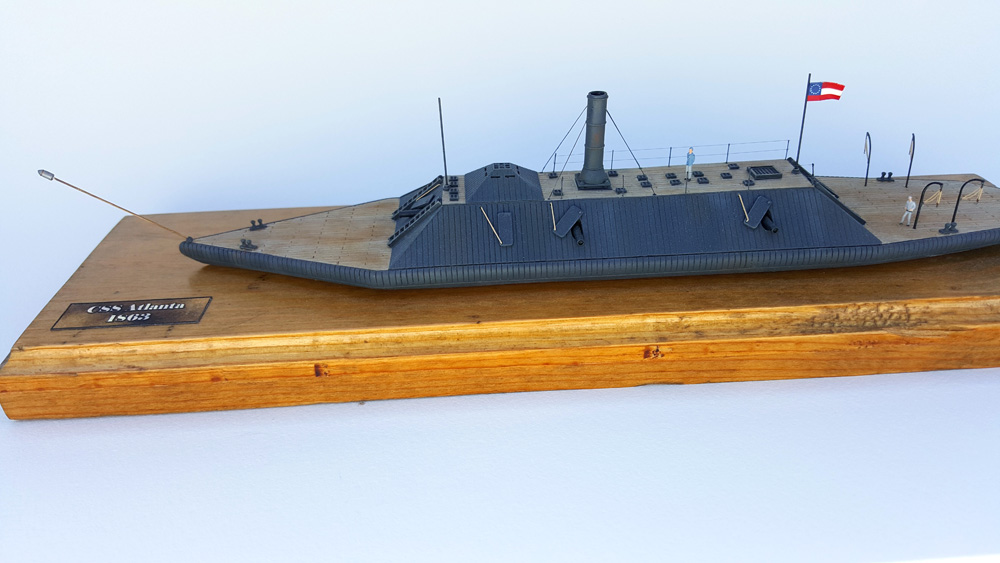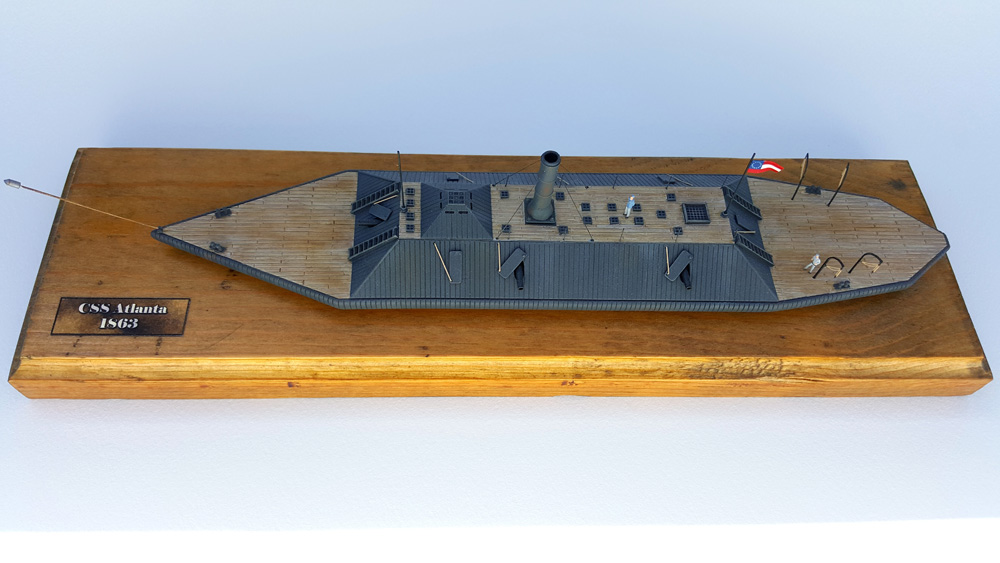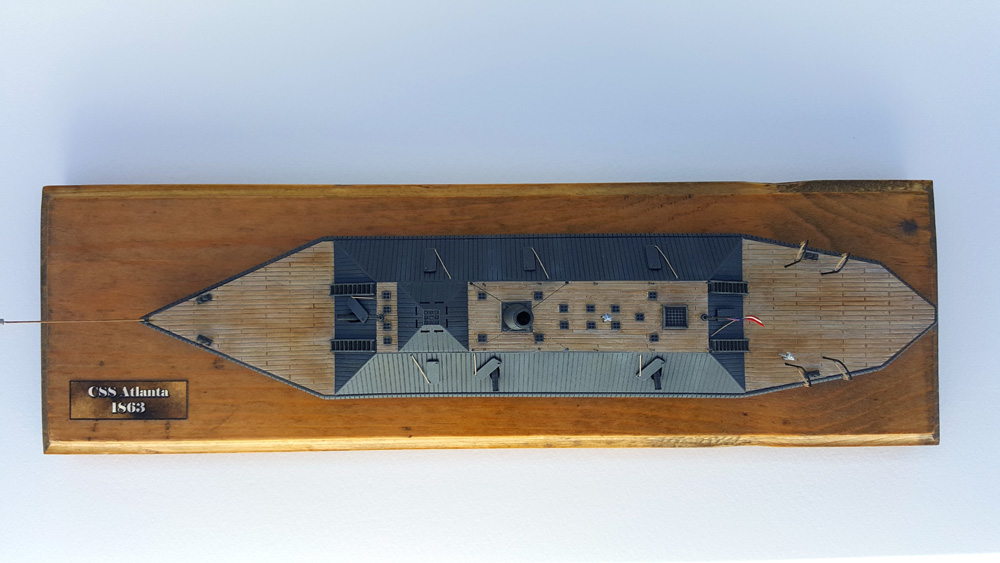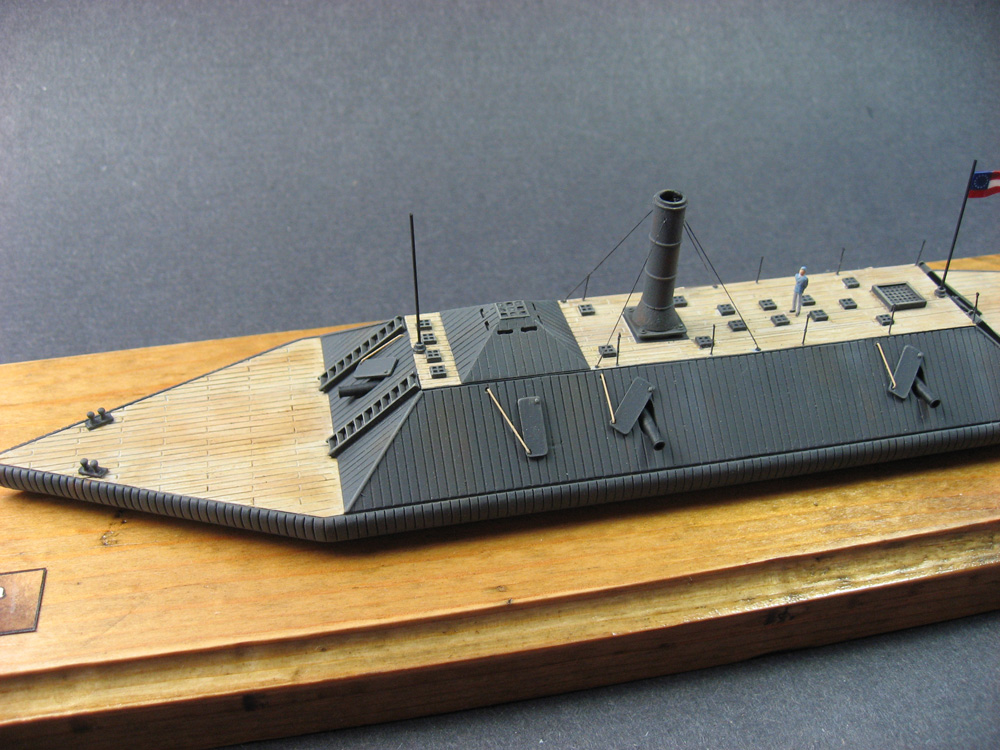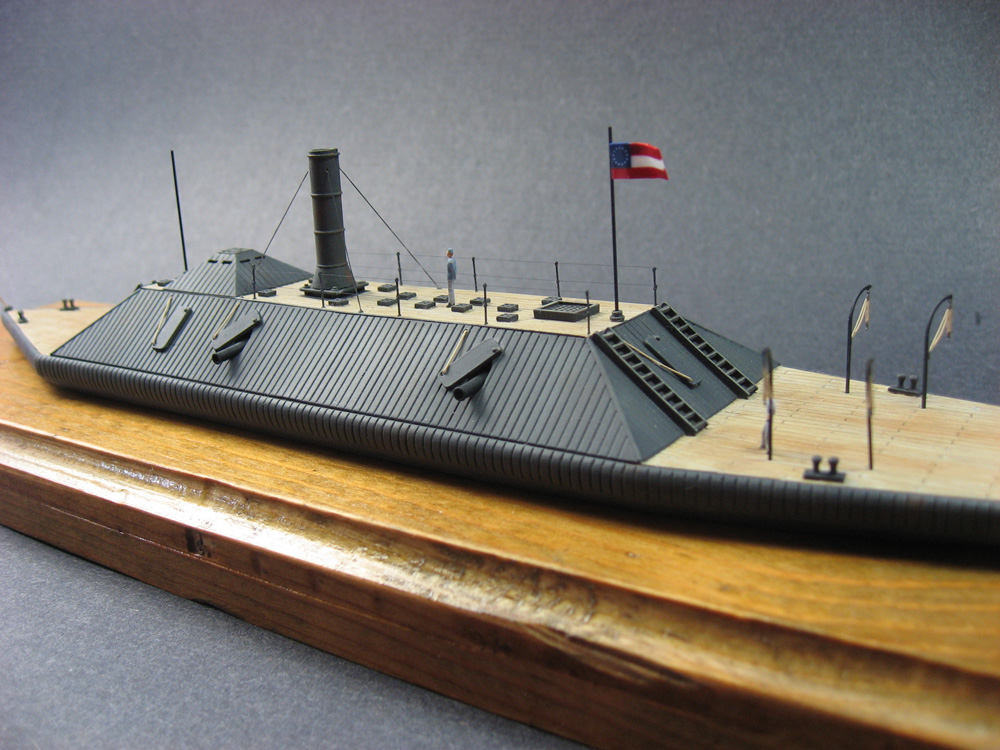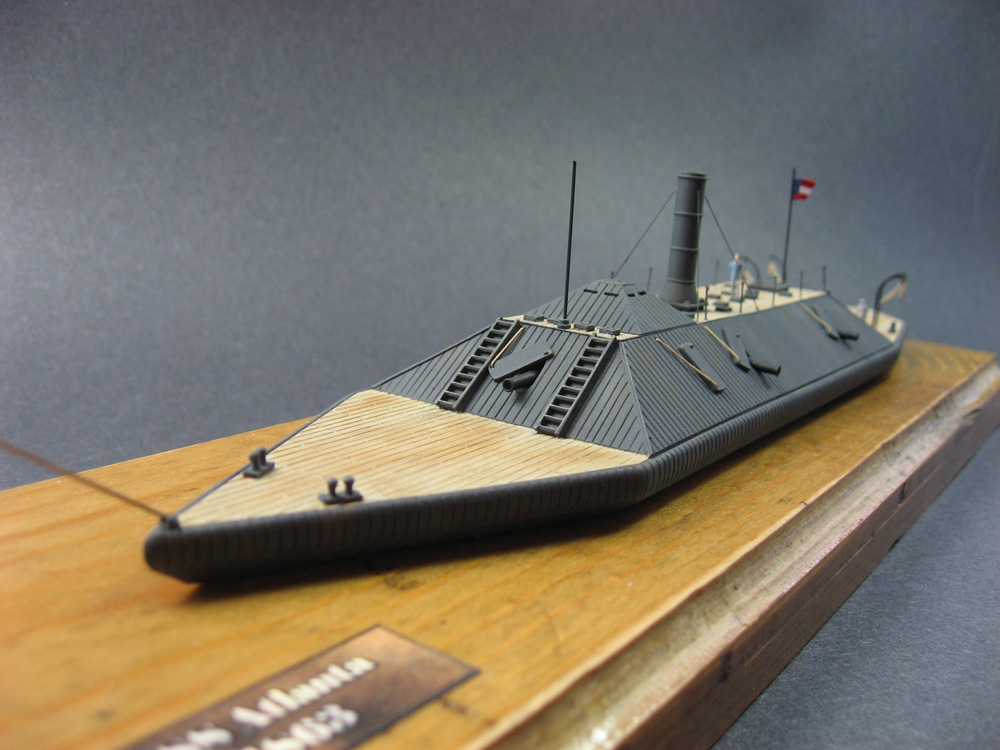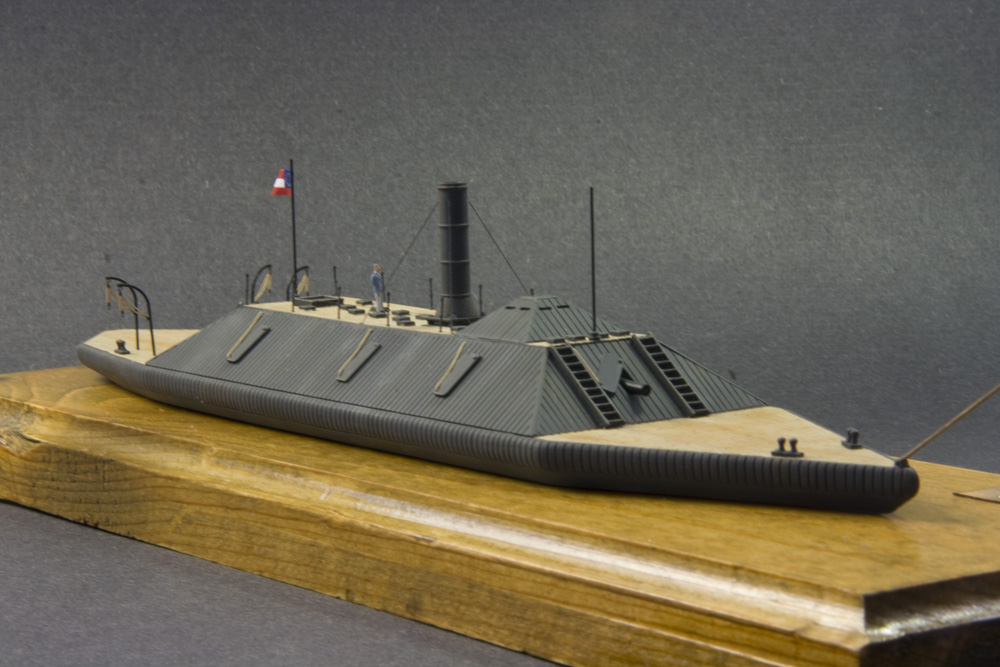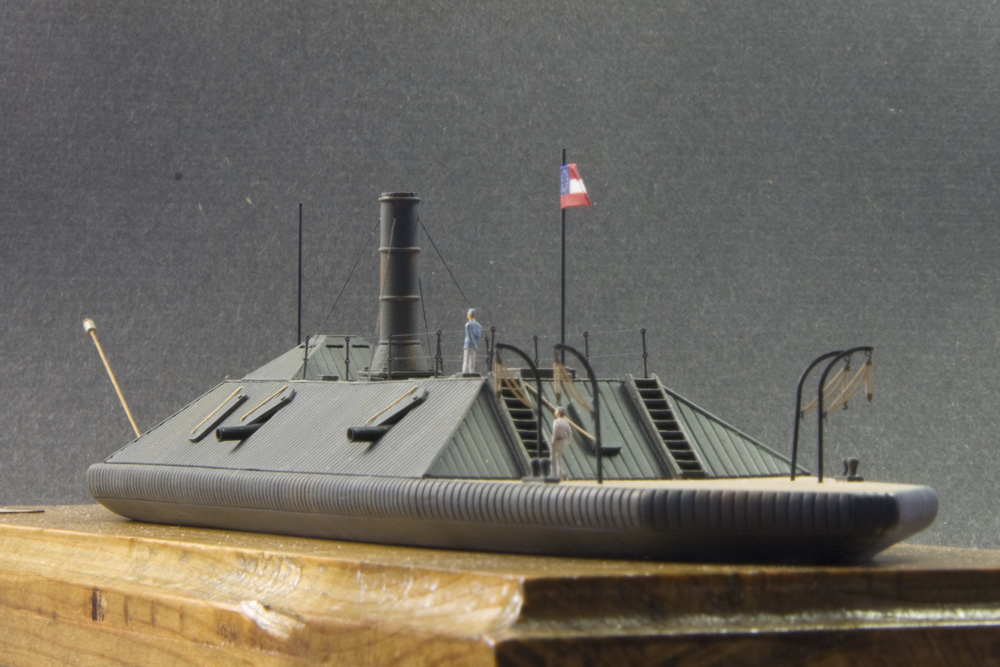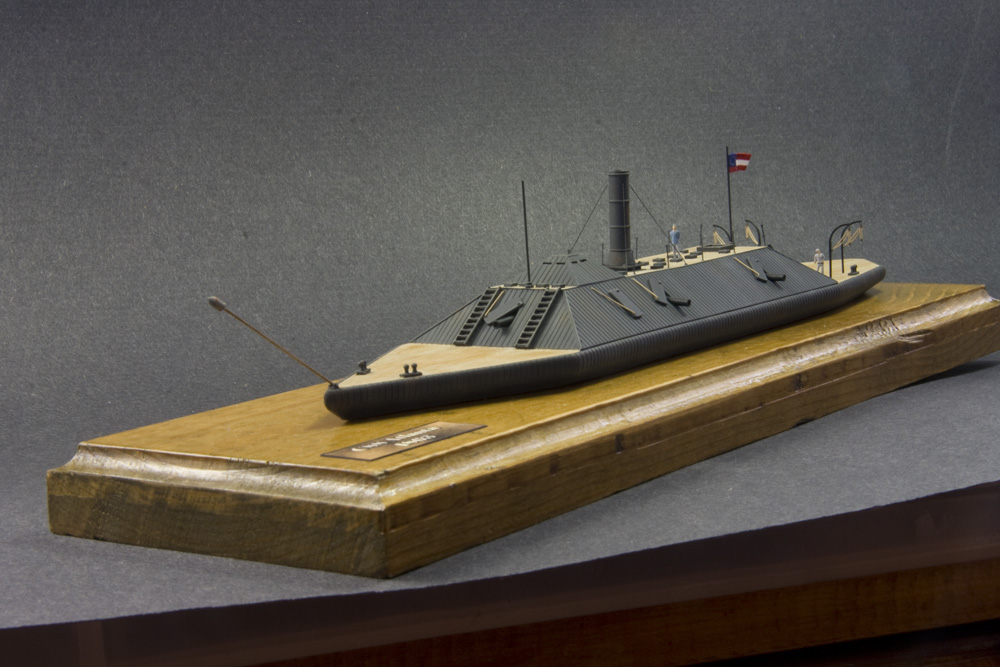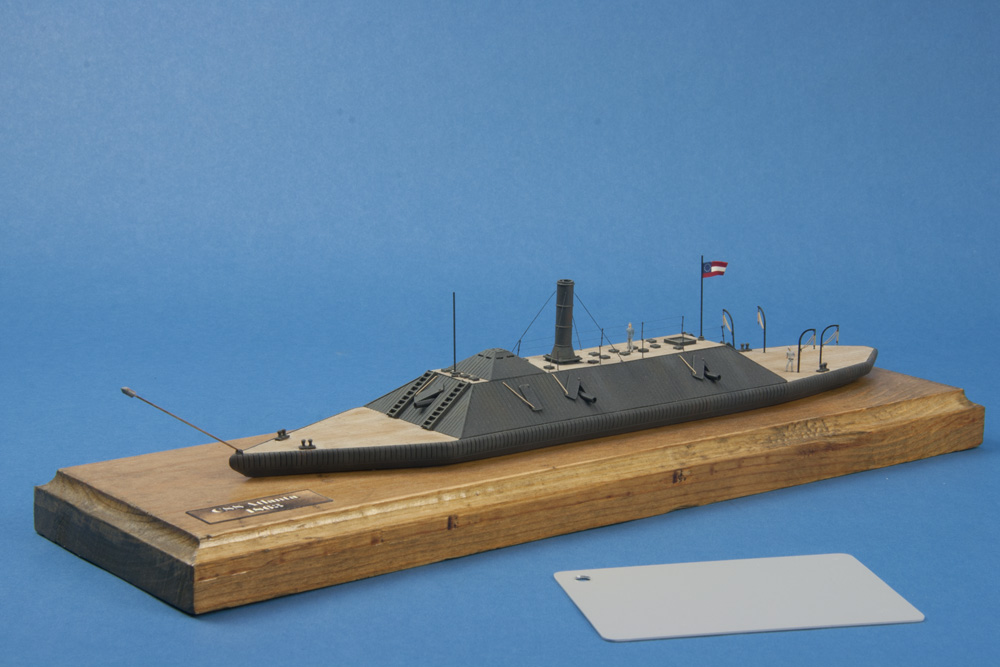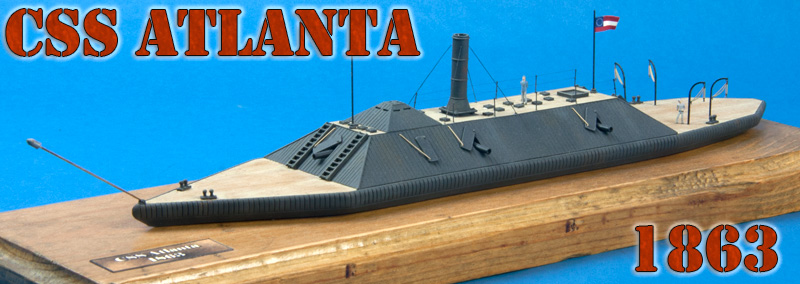
The ironclad CSS Atlanta started out life as the blockade runner Fingal. Built in Scotland, she made a single run of the blockade into Savannah, GA in November of 1861. Bottled up in port by the Union fleet, she was taken under contract by Asa and Nelson Tift, brothers and shipbuilders, for conversion to an ironclad warship. The conversion, largely funded by contributions from the women of Savannah, took place over the course of 1862. Commissioned in November of that year, her only action as a Confederate warship came on 17 June of 1863, when she engaged the Union monitors Weehawken and Nahant. Struck several times and damaged by the Union warships, Atlanta ran aground and surrendered. Taken into the Union navy, she served the rest of the war as part of the North Atlantic Blockading Squadron, spending most of her time on the James River outside of Richmond. Decommissioned at the end of the war, she was sold to Haiti in 1869, but vanished en route to that country with all hands, leaving no trace.
Paints Used
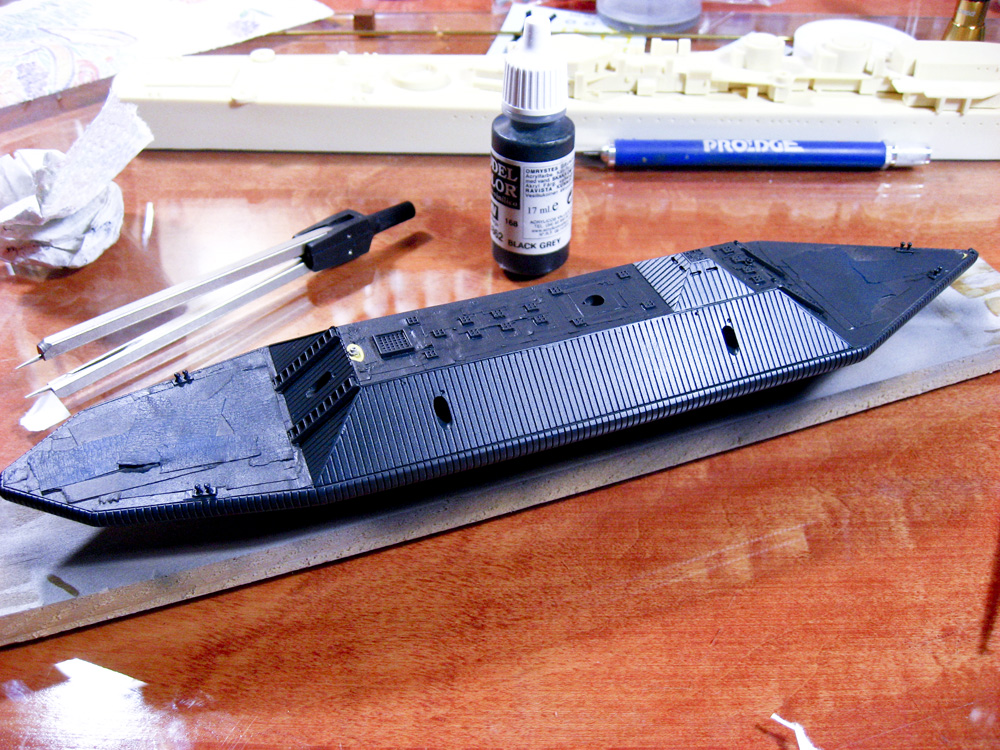
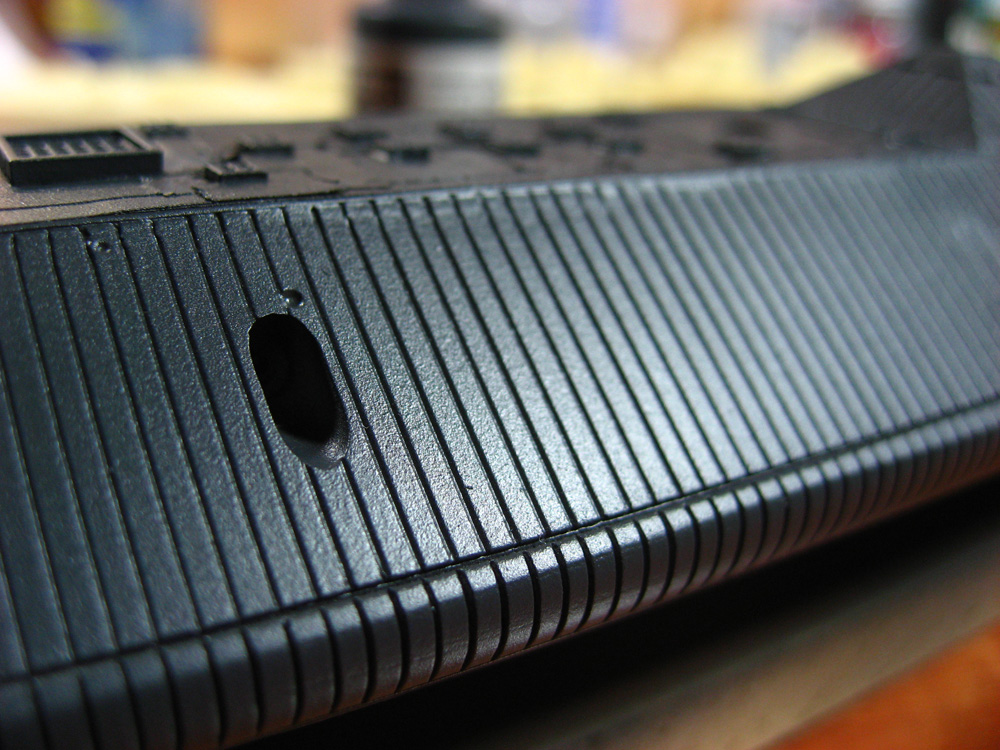
* Casemate: overall Vallejo Model Air “German Gray”, blotched and streaked with “Black Gray”
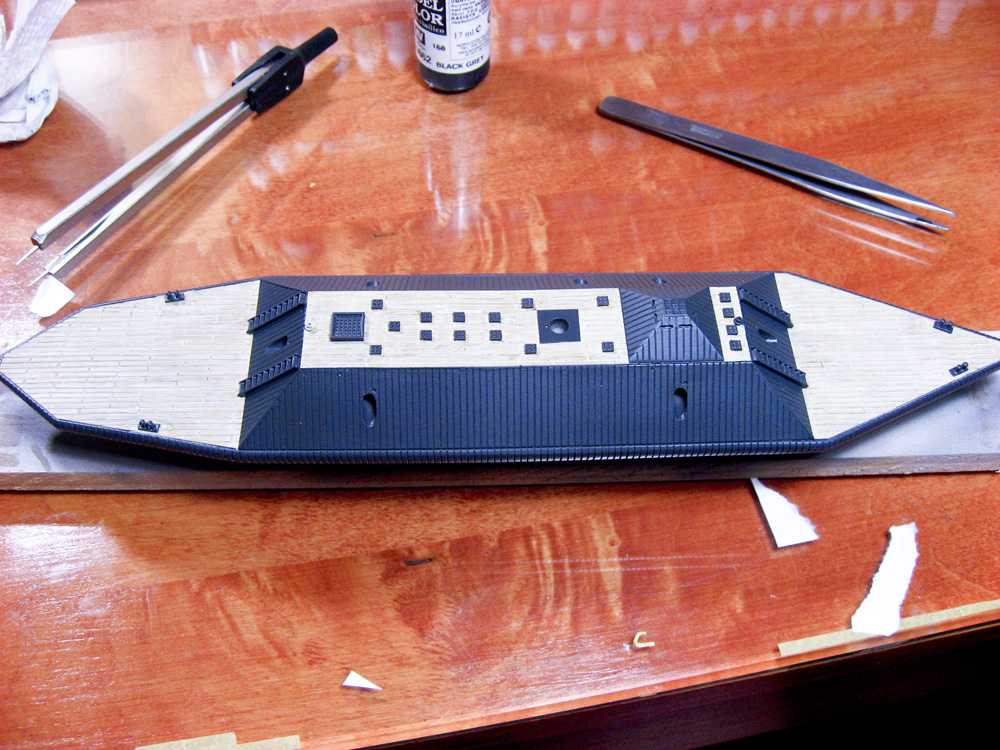
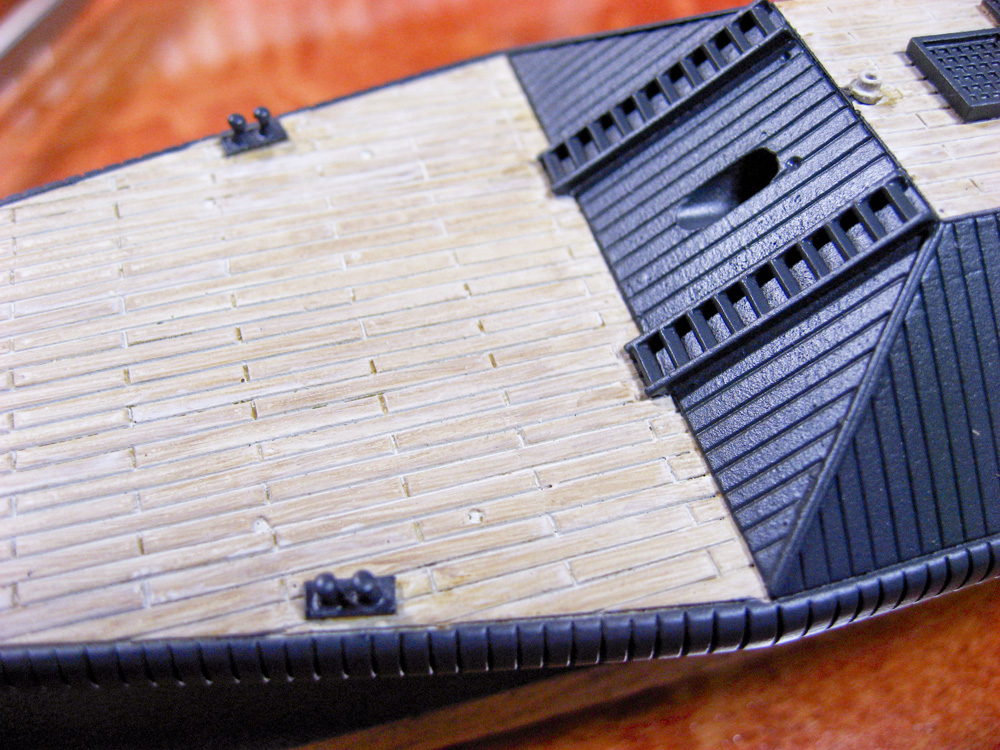
* Wood Deck: Vallejo Tan overall, glazed with English Uniform
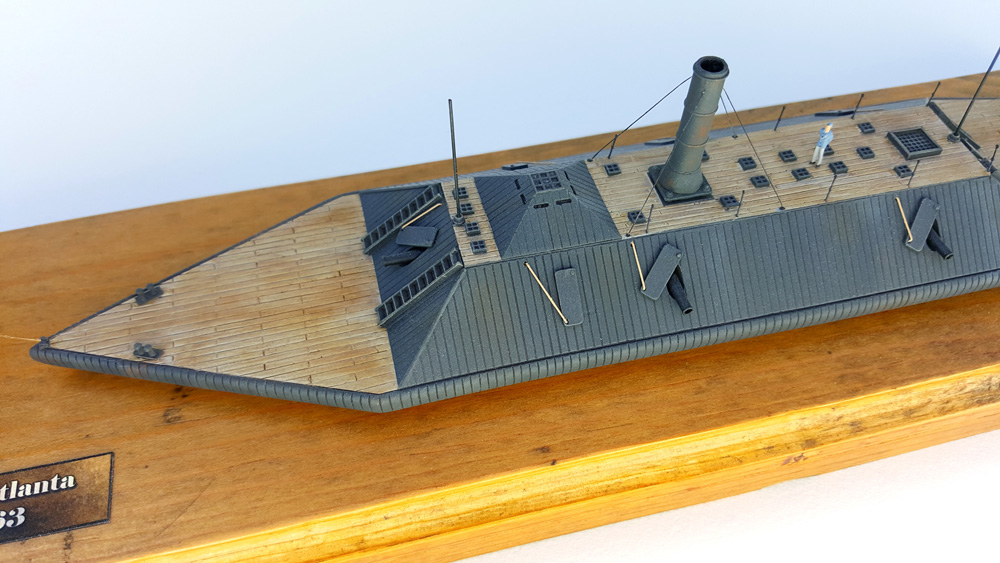
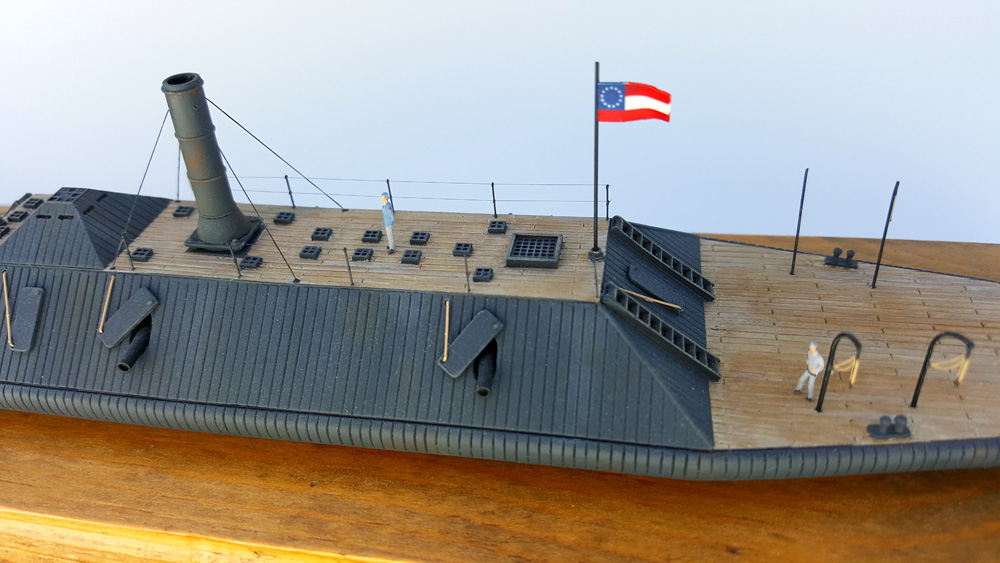
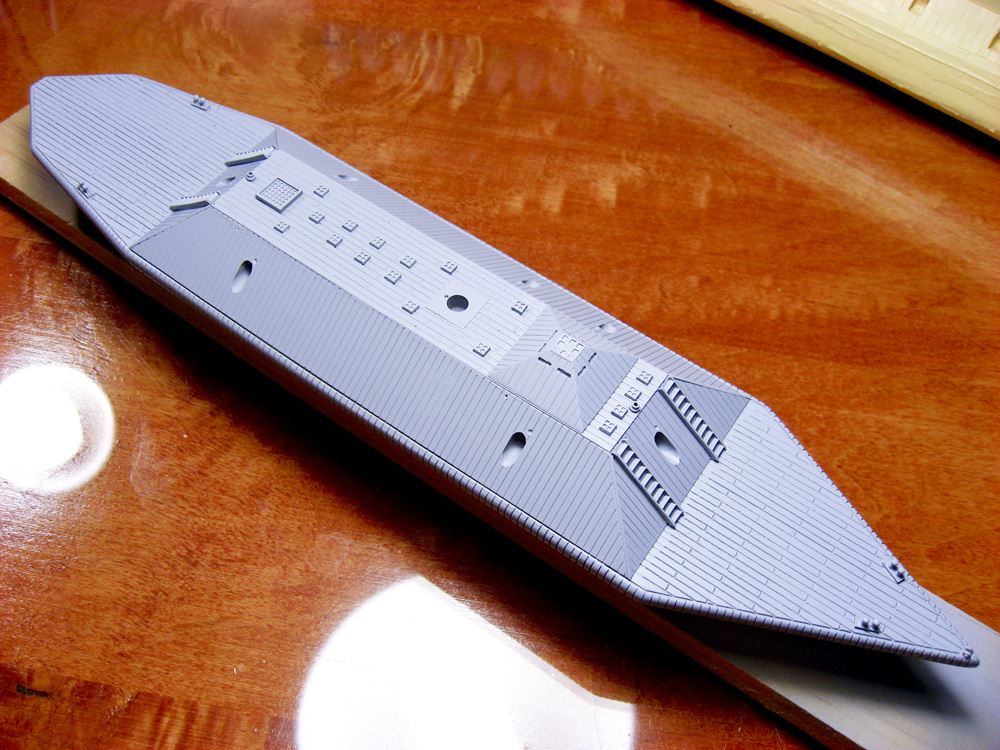
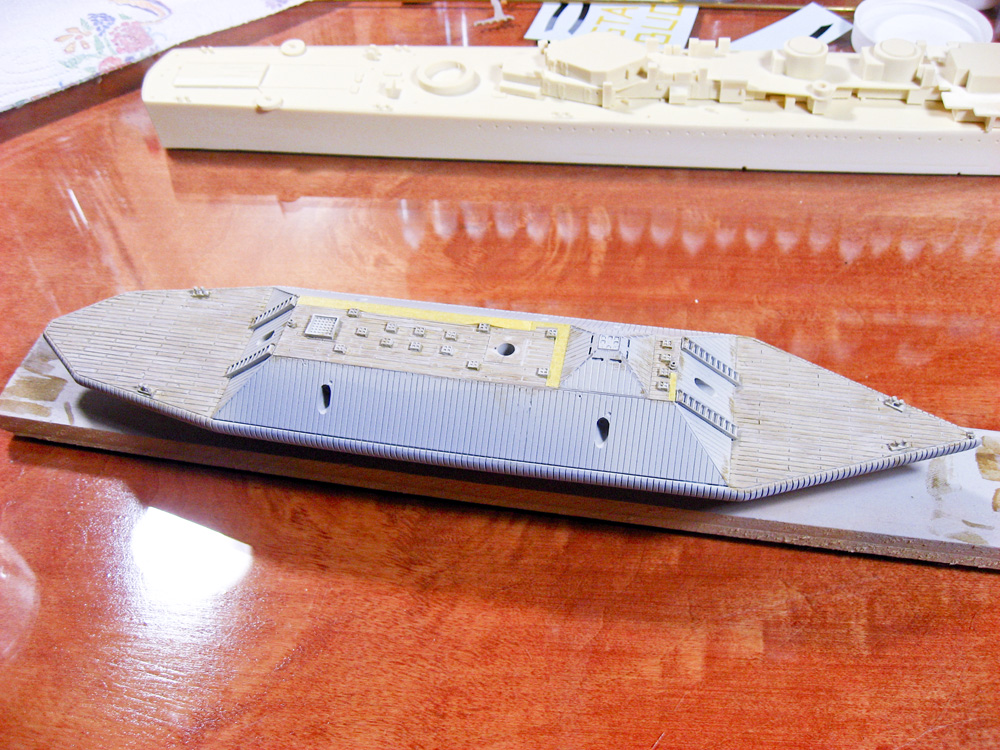
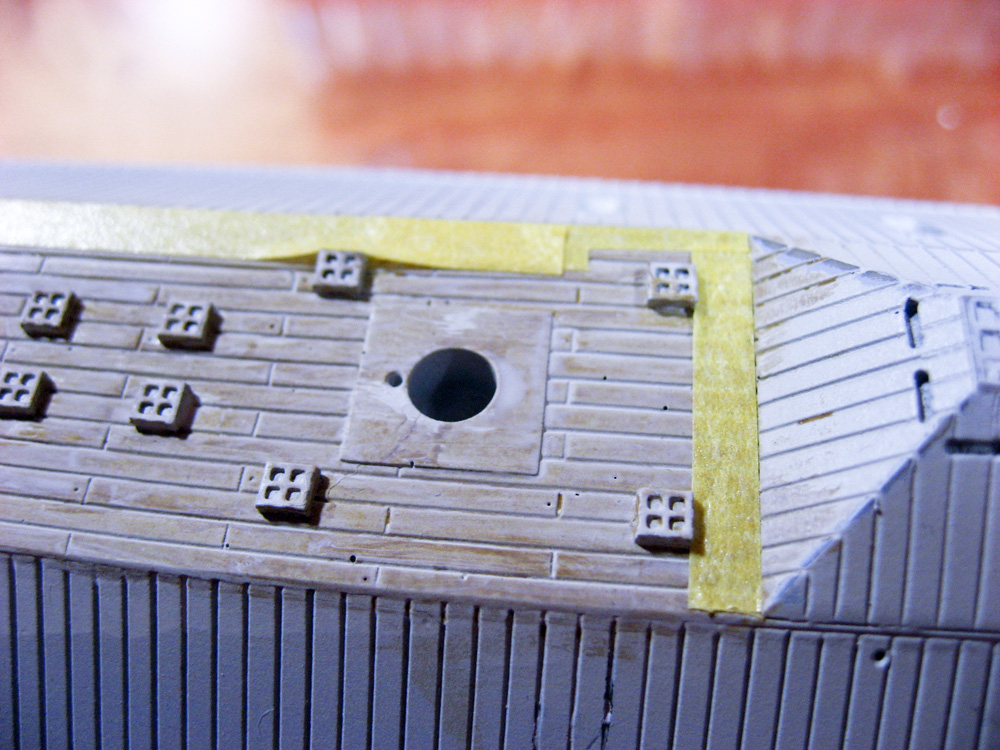
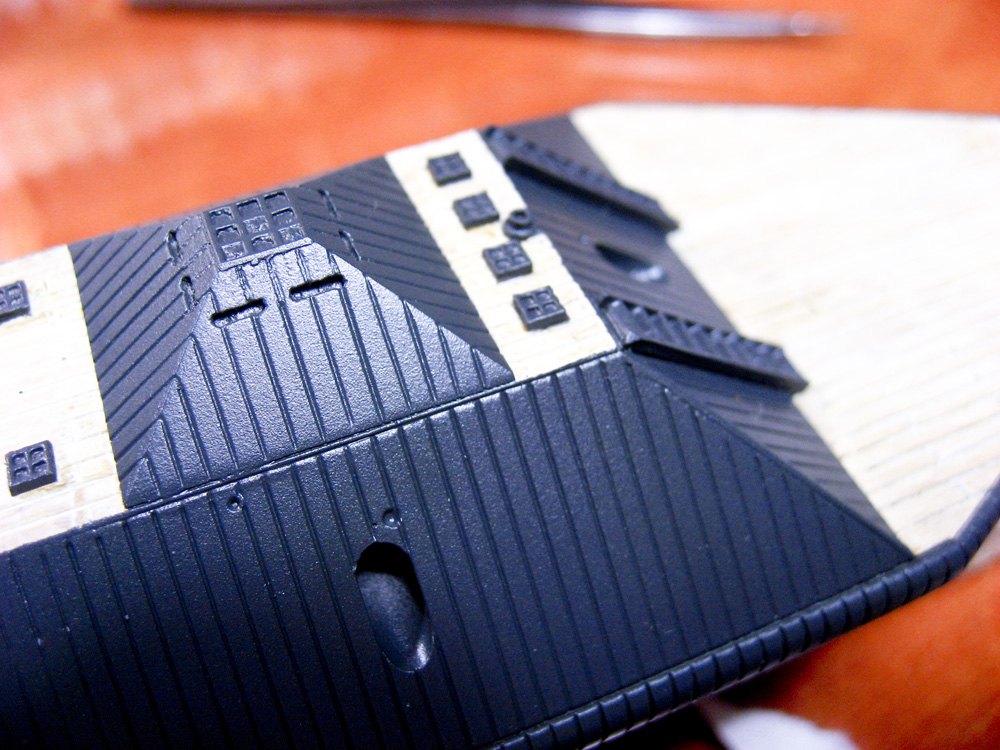
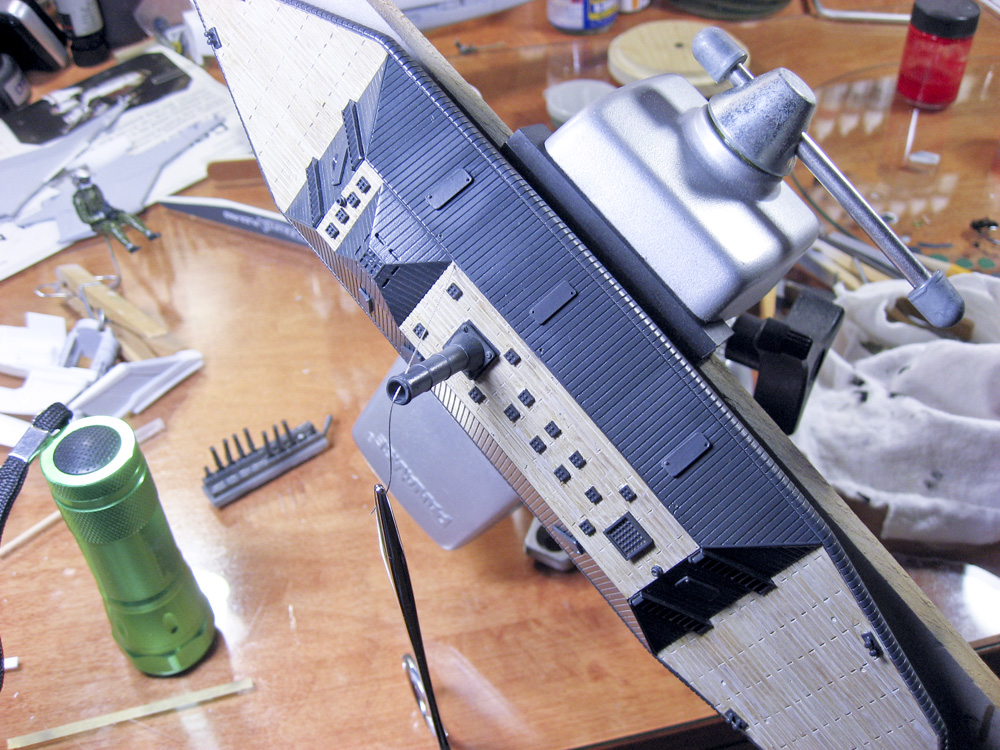
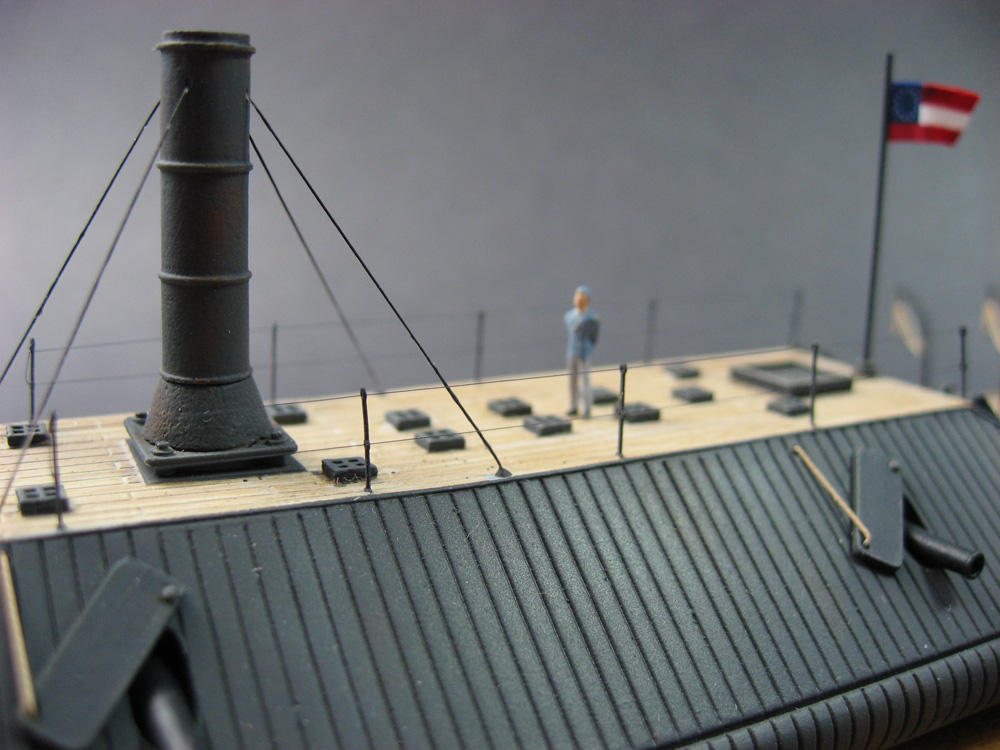
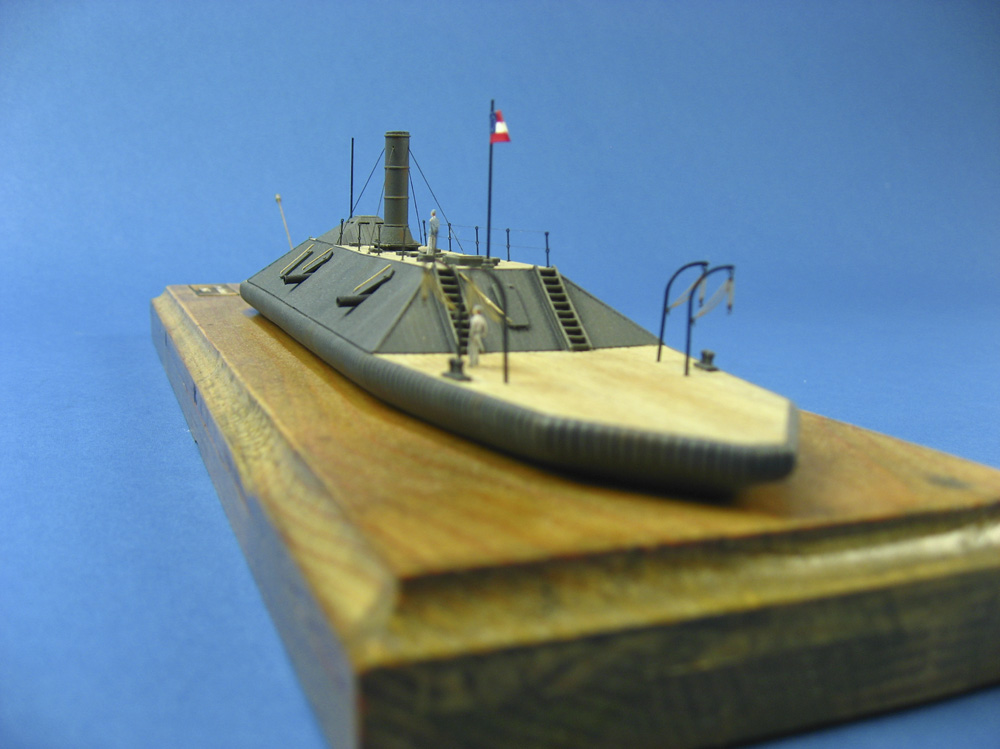
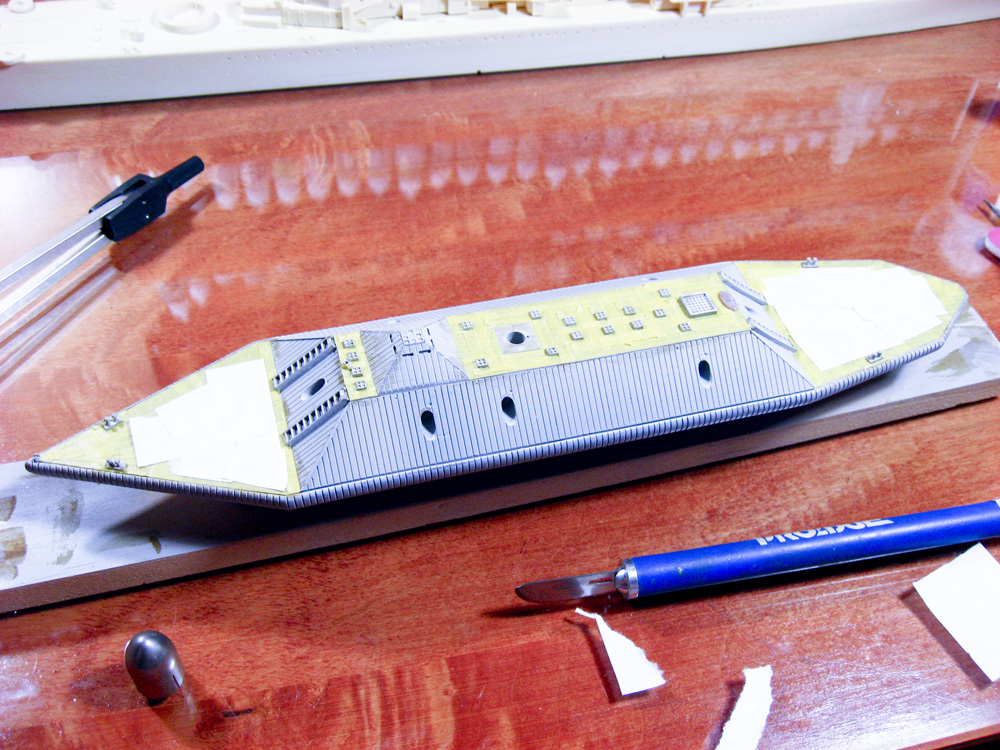
Verlinden Productions produced a half-dozen or so 1/200 scale resin ironclad kits at one point. You can still find them if you are persistent, but they’re long out of production and their $25 price tag has jumped into the hundreds. The Atlanta has a few issues, most notably being the second gun port on her starboard side is too far forward. A relatively easy fix: fill the port with Apoxie Sculpt, scribe in the armor lines, then place the gun port shutter in the closed position further aft. Had I been paying attention, I’d have added a few small hatches on both the forward and aft decks, and run the anchor chains out of the forward face of the casemate, but I didn’t. Also, the torpedo spar is incorrectly shaped — the real one had a funky almost “s” curve to it — so that’s a another ding against accuracy. The biggest issue with the model is that it’s under scale. Measuring out Atlanta’s published length and comparing to the model she comes in at approximately 1/240th scale, and not the advertised 1/200. Otherwise, construction consisted of adding photo etch gun shutters, boat davits and railing stanchions from a Flagship Models set, a few figures, and basic rigging of the funnel stays and lifelines.
With the simplicity of the build and leaving the lack of certain details as-is to facilitate construction time, I spent most of this build on the paint. Black is hard to pull off, and the worst thing you can do to create a black model is to actually use black paint. I went with two shades of dark gray, sprayed in overlapping vertical patterns, then streaked the result with salt and rust stains made from pastel chalk. I bumped up the flatness of the final dullcoat in order to give more of an overall chalky appearance.
The Atlanta was a quick, fun build. I wish I’d tackled more of the issues I ignored on this one, namely adding the anchors and missing hatches, filling in the over scale wood decking lines, and adding the ship’s boats. But, overall, a successful project.