Category Archives: Ironclads and Gunboats

USS Monitor Lab Dark and Shuttered

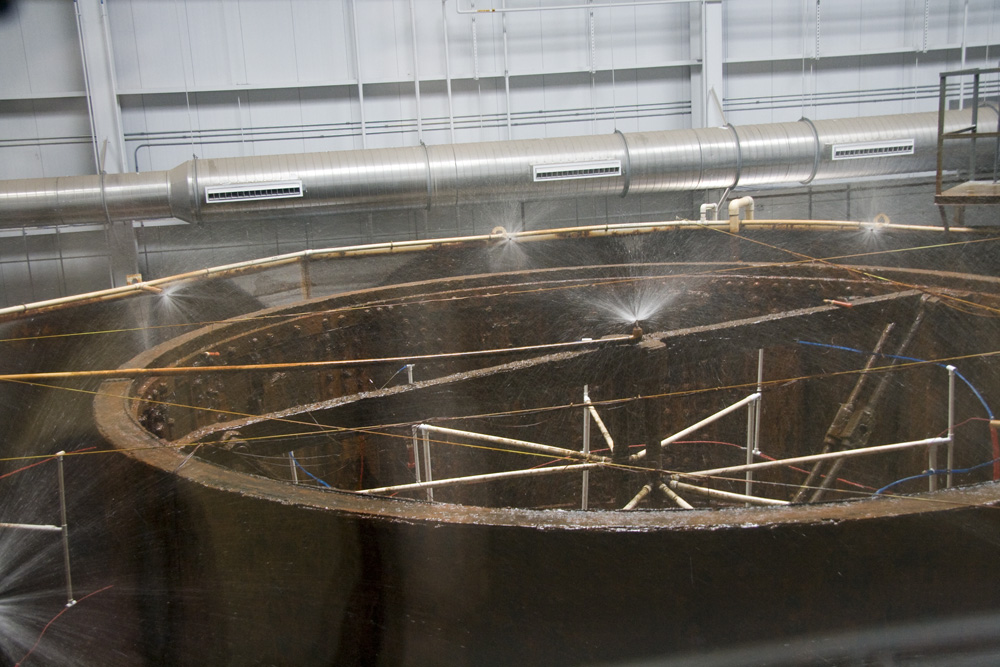
Photo taken during September 2011 visit to Mariner's Museum.

NOAA doesn’t have the funding to support operations of the USS Monitor wet lab at the Mariner’s Museum. While the regular museum, and I assume the research library, is still open, the lab with the tanks that house the turret, guns, engine, and other artifacts, have had the lights turned off and the tanks covered with tarps.

You can read the full story in the Virginia Pilot’s Online Edition.

The Mariner’s Museum web page has the full press release and various links of use.

There’s also a Change.org petition on the matter.

Wreck of Gunboat USS Westfield Recovery

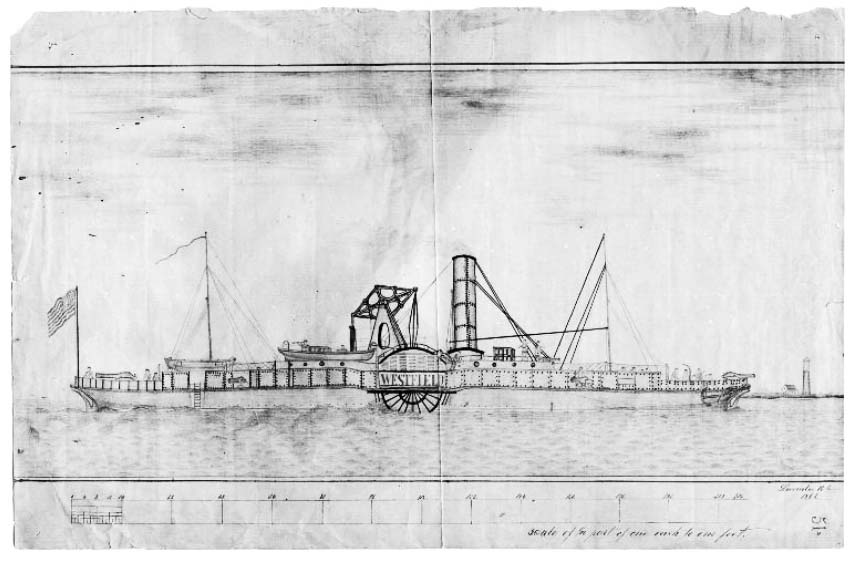
USS Westfield image from gulfwrecks.netOne of my big areas of interest that I’ve yet to really delve into in Civil War history is that of the ferry gunboats. When President Lincoln immediately implemented a blockade in 1861, there simply weren’t enough ships in the Union Navy to seal off the Confederate ports. The government set to buying anything that would float, including New York City ferries. The idea of a Staten Island ferry, loaded with guns, sent south and made a Continue reading

New York Times “Disunion”: Raiding the Keokuk

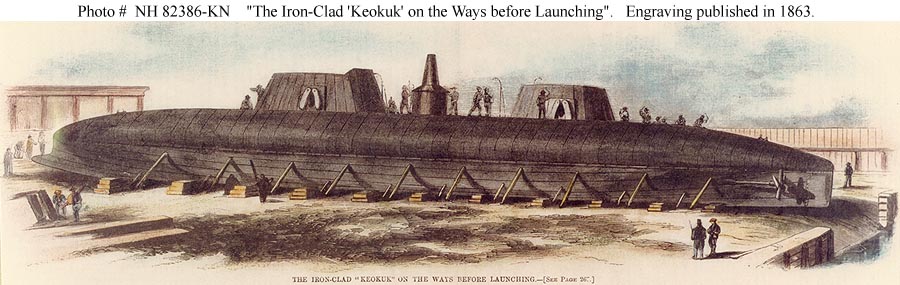
keokukMy third piece for the New York Times “Disunion” series is now online. “Raiding the Keokuk” is about a daring salvage operation of an enemy warship in contested waters. The warship, USS Keokuk, is one of those oddities of technology that really should never have been built. As necessity during wartime can result in brilliant success — i.e. USS Monitor — it can also generate spectacular failures.

I’m really happy with this piece as I was able to get much closer to individuals and a single ship. USS Keokuk, while not a successful design, was a unique looking vessel, and I have a model of her in-progress that I look forward to completing.

Direct link to article HERE.

USS Chickasaw Part 9: Stern-O-Plasty

I’d planned on the joining of the upper and lower hulls on Chickasaw to be an ordeal, but it wasn’t as bad in some respects as I’d expected, but was worse in other respects. While Chickasaw doesn’t have the full “raft over a lower hull” arrangement of the original Monitor or her follow-on Passaic class ironclads, it does exist. While building the lower hull, I exerted too Continue reading

New York Times “Disunion”: Rise of the Infernal Machines

cushing

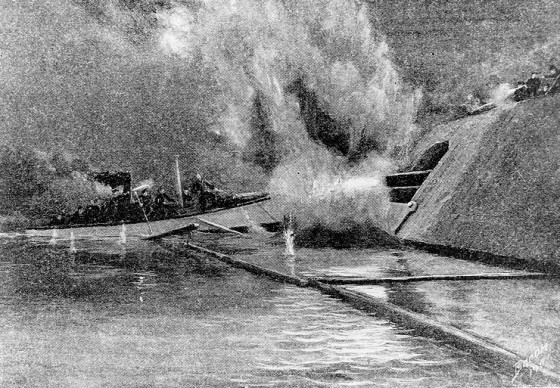
My second piece for the Times’ “Disunion” web series has been published. “Rise of the Infernal Machines” gives an overview of the torpedoes of the day, what we now mostly know as mines. Crude, unstable, and mostly non-functional, they provided the Confederacy with a new weapon with which to strike back at the superior Union navy. Despite their endless problems, they succeeded in sinking more Union warships than all other means combined (probably speaking more to the ineffectiveness of Confederate warships and fortifications than to effectiveness of the torpedoes). The article can be access HERE.

New York Times “Disunion” Piece Published

city buildingVery happy to announce that the New York Times has published my first piece for their website. Ironclad Fever is about the armored warship building frenzy in both North and South after the Monitor and Virginia (Merrimack) battle in 1862.

I’m extremely pleased to be able to put all of the historical research I’ve done while building models and writing stories into this format.

150 Years Ago Today: USS Cairo, Preserved by Gunpowder

“…I heard an explosion from the Cairo, and on looking up (from a small boat on the river) I saw her anchor thrown up several feet in the air.” – Ensign Walter E.H. Fentress

“…just as we were training on the battery (gun emplacement or torpedo), we were struck by a torpedo, which exploded under our starboard bow, a few feet from the center and some 35 or 40 feet from the bow proper just under our provision store room, which crushed in the bottom of the boat so that the water rushed in like the roar of Niagara.  In five minutes the Hold was full of water and the forward part of the gunboat was flooded… One of our heaviest bow guns had been dismounted by the force of the explosion, injuring three men.” -George Yost.

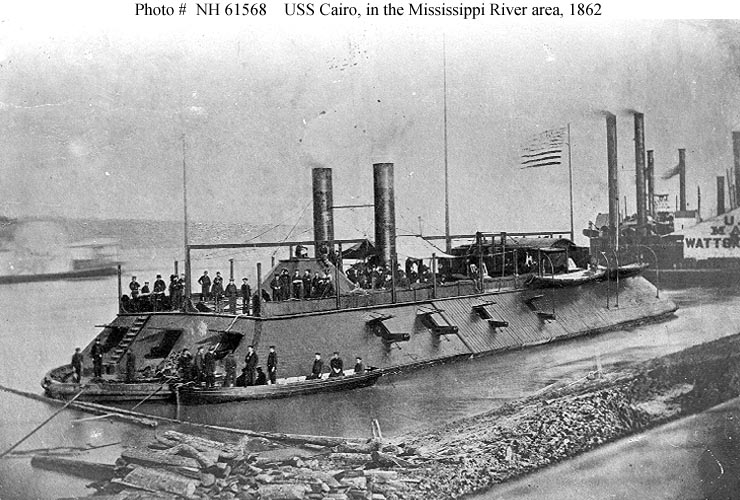
On December 12th, 1862, the American Civil War saw yet another military first: USS Cairo became the first warship sunk by an underwater mine, or torpedo as they were known at the time. The Union Navy had known of Continue reading

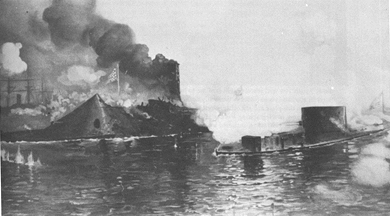
150 Years Ago Today: USS Monitor vs. CSS Virginia

In a state-of-the-art museum and conservation lab in Newport News, Virginia, sit large tanks of fresh water that hold large rusting chunks of iron that are over 150 years old. 150 years isn’t a long time for some museum artifacts; in Manhattan one can visit the Metropolitan Museum and see Buddhist statues over 500 years old, then walk several yards down the hall and see mummies thousands of years old. But the significance of the rusted iron from USS Monitor that rests in The Mariner’s Museum in Virginia isn’t in its age; it’s in the revolution that it brought.

The battle between USS Monitor and CSS Virginia 150 years ago today is one of the few naval battles, Continue reading

USS Weehawken: Scribing

After some time away from the work bench I have returned to the USS Weehawken. After weeks of looking at it, sitting there, mocking me as I mulled over ways to approach the armor plating on the deck, I finally decided to just dive in.

markingI worked off of what few photos could be found on the internet of the actual monitor, photos of other monitor kits, and photos of models that others have built. I decided the brick-like layout that is most commonly depicted is probably the best bet, as there is little evidence against it. I started by drawing laying a pencil line down the center of the deck. Fortunately that was easy, as every line on the deck is either parallel or perpendicular to this line, so it had to be straight. I then marked off the perpendicular lines, continually checking them with dividers and a square. I decided the distance between them again by photo guesstimates, and by the fact that I have a ruler that is darn close to being as wide as measurements that I came up with.

scribingNext came out the scribing tool. I’ve never scribed anything on this scale before and it was daunting. I used a special tool that Squadron Hobbies produces (it looks like a particularly nasty dental scraper). It removes a fine ribbon of material on each pass, and after three passes on each line with the smaller head, it was done. The resin on this kit has more tiny airbubbles than I would like to see, and at points the tool did dig into pockets of them and cause irregular edges, but for the final “used” look I want for this model it wasn’t a deal-breaker.

pencilAfter scribing those lines, out came the pencil and the straightedge and I began drawing in the alternating lines parallel to centerline, that run fore and aft. I continually checked my work with dividers to make sure I kept every resulting rectangle the same size. I’m almost positive this symmetry was not present on the real ships, but with nothing else to go on to contradict the pattern, I kept it as it adds a nice visual effect.

side I went with the assumption that the armor plates terminated at the very edge of the hull. They did this on the original Monitor, so why not? This meant I needed a line the thickness of the plates on the side of the hull. The blue tape is Dynamo label tape, from those old plastic label makers. It’s thick enough to provide a solid edge for the scribing tool to run along. I measured off the thickness of the plates to something that looks good and applied the tape. I don’t like to leave it on the model too long as it has a tendency to pull the primer from some of those air bubble areas on the hull, so I lay it down, scribe the line, and remove it.

Quite a bit of progress for only a weeks work, off and on. Now I have to figure out how to replicate the flush-faced rivets that are needed on the sides of the hull.