Category Archives: Modeling

USS Weehawken: Scribing

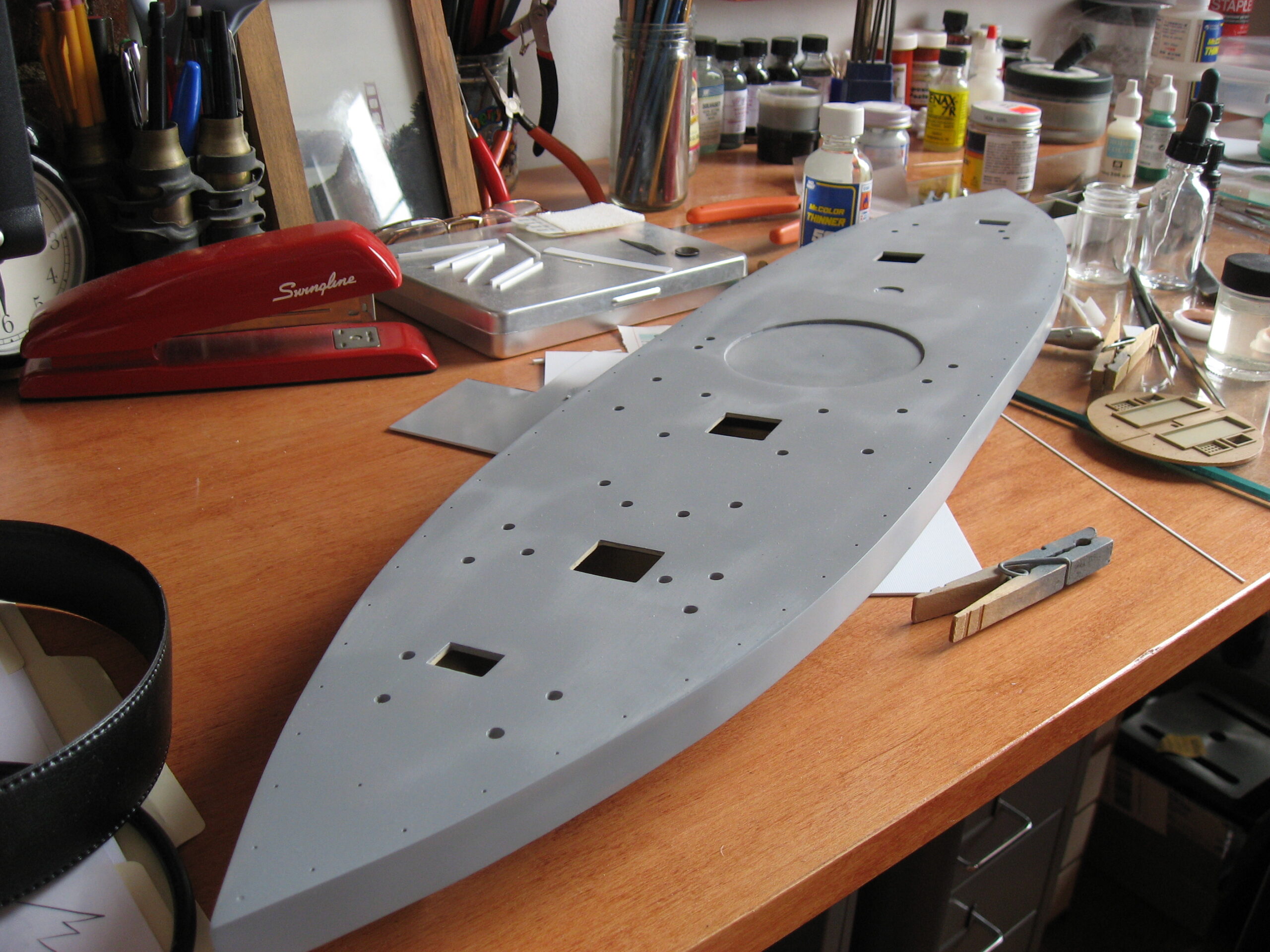
After some time away from the work bench I have returned to the USS Weehawken. After weeks of looking at it, sitting there, mocking me as I mulled over ways to approach the armor plating on the deck, I finally decided to just dive in.

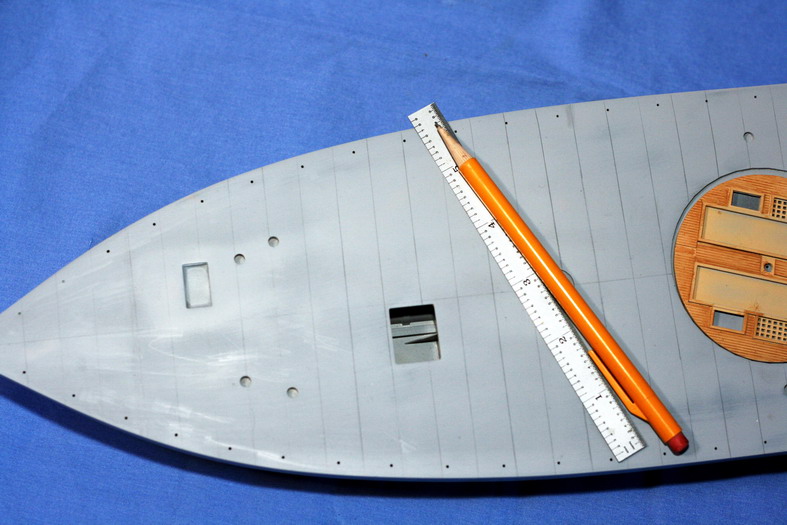
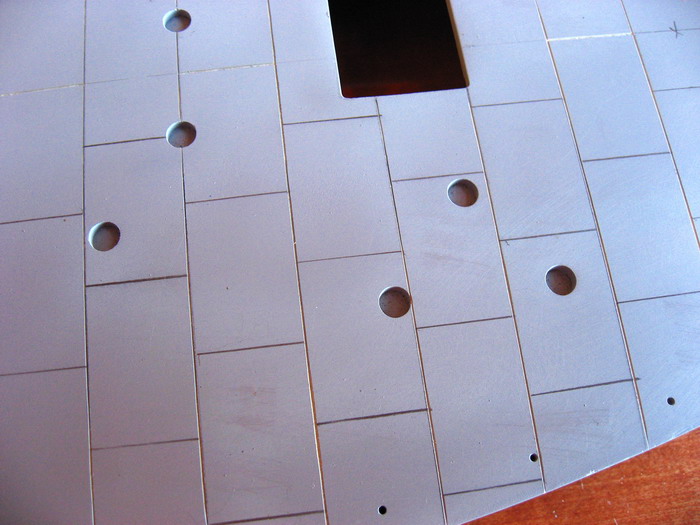
markingI worked off of what few photos could be found on the internet of the actual monitor, photos of other monitor kits, and photos of models that others have built. I decided the brick-like layout that is most commonly depicted is probably the best bet, as there is little evidence against it. I started by drawing laying a pencil line down the center of the deck. Fortunately that was easy, as every line on the deck is either parallel or perpendicular to this line, so it had to be straight. I then marked off the perpendicular lines, continually checking them with dividers and a square. I decided the distance between them again by photo guesstimates, and by the fact that I have a ruler that is darn close to being as wide as measurements that I came up with.

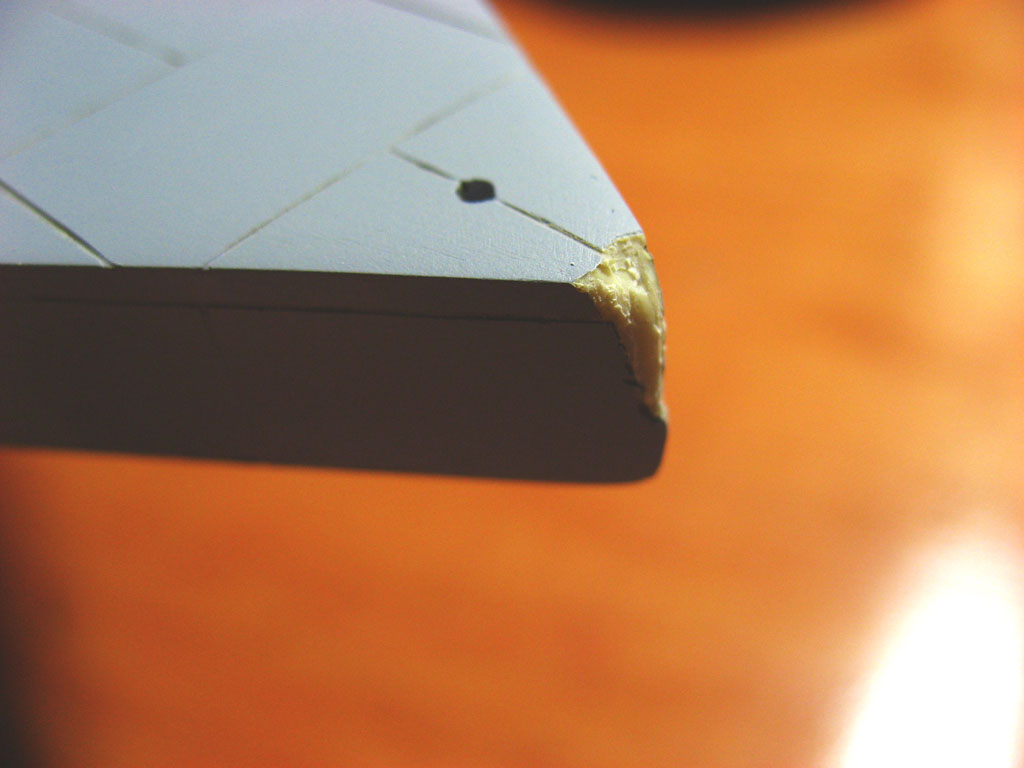
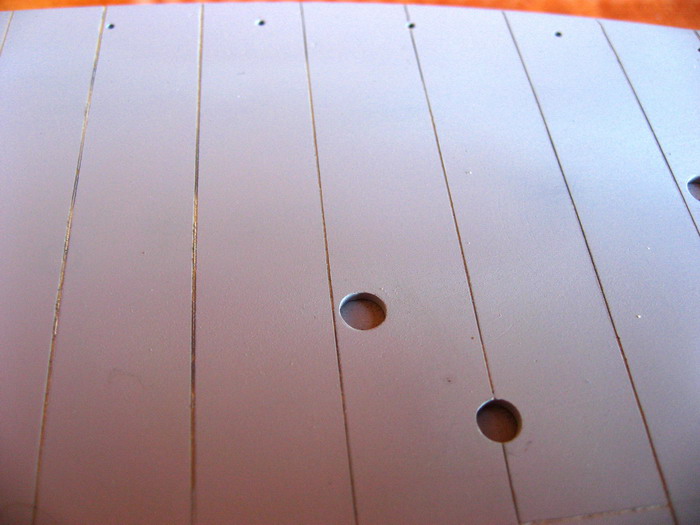
scribingNext came out the scribing tool. I’ve never scribed anything on this scale before and it was daunting. I used a special tool that Squadron Hobbies produces (it looks like a particularly nasty dental scraper). It removes a fine ribbon of material on each pass, and after three passes on each line with the smaller head, it was done. The resin on this kit has more tiny airbubbles than I would like to see, and at points the tool did dig into pockets of them and cause irregular edges, but for the final “used” look I want for this model it wasn’t a deal-breaker.

pencilAfter scribing those lines, out came the pencil and the straightedge and I began drawing in the alternating lines parallel to centerline, that run fore and aft. I continually checked my work with dividers to make sure I kept every resulting rectangle the same size. I’m almost positive this symmetry was not present on the real ships, but with nothing else to go on to contradict the pattern, I kept it as it adds a nice visual effect.

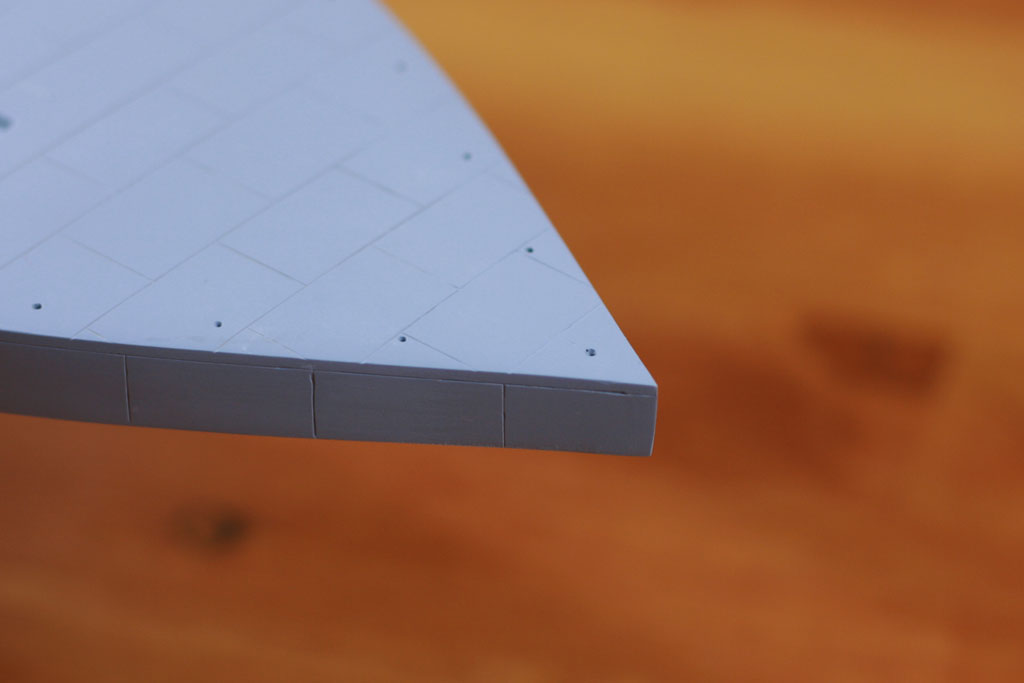
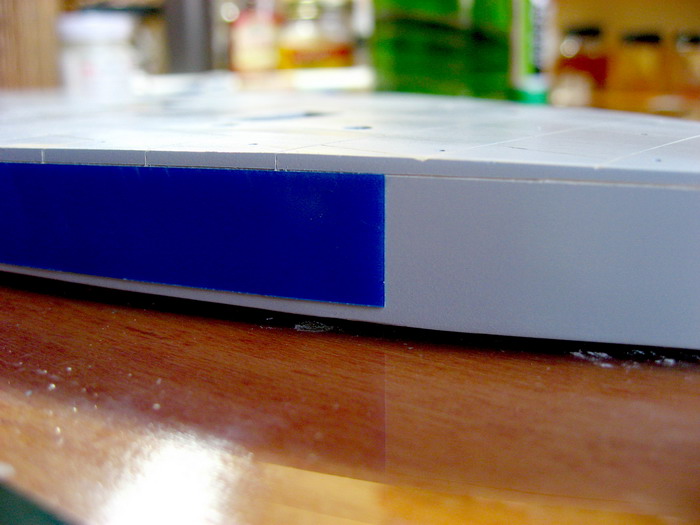
side I went with the assumption that the armor plates terminated at the very edge of the hull. They did this on the original Monitor, so why not? This meant I needed a line the thickness of the plates on the side of the hull. The blue tape is Dynamo label tape, from those old plastic label makers. It’s thick enough to provide a solid edge for the scribing tool to run along. I measured off the thickness of the plates to something that looks good and applied the tape. I don’t like to leave it on the model too long as it has a tendency to pull the primer from some of those air bubble areas on the hull, so I lay it down, scribe the line, and remove it.

Quite a bit of progress for only a weeks work, off and on. Now I have to figure out how to replicate the flush-faced rivets that are needed on the sides of the hull.

Sign of the Season

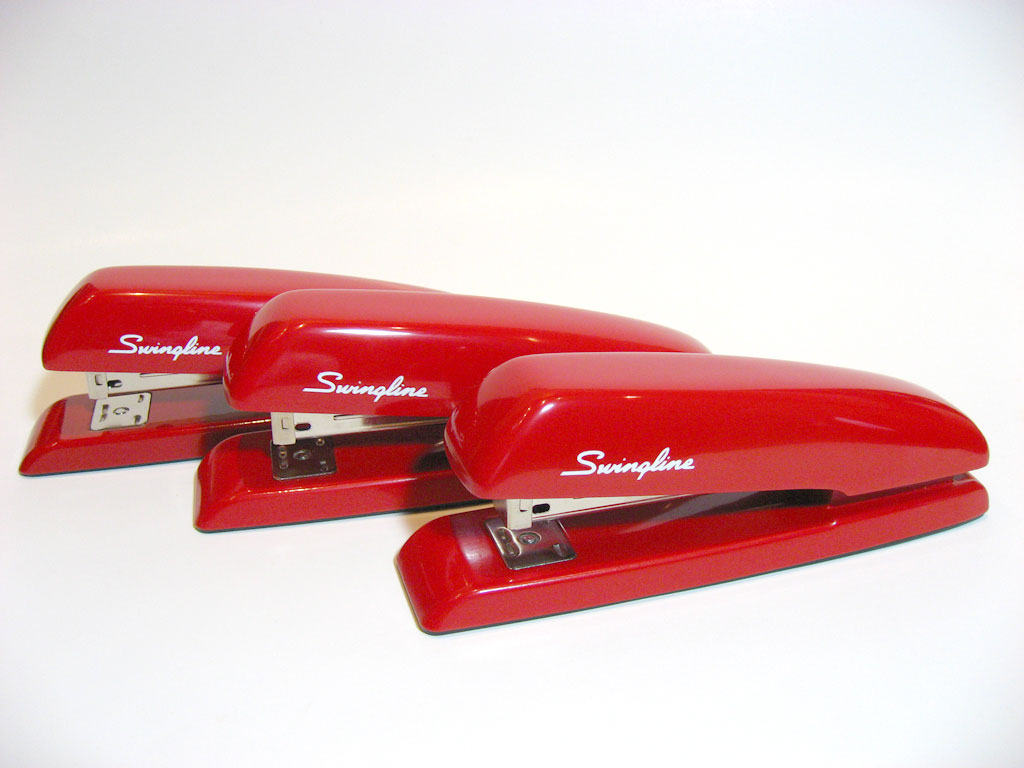
SwinglinesYou can be certain that warm weather has arrived when the new crop of red Swingline staplers start showing up in Hoboken. Here’s a triple-shot of some I completed this past weekend.

Back to some resin

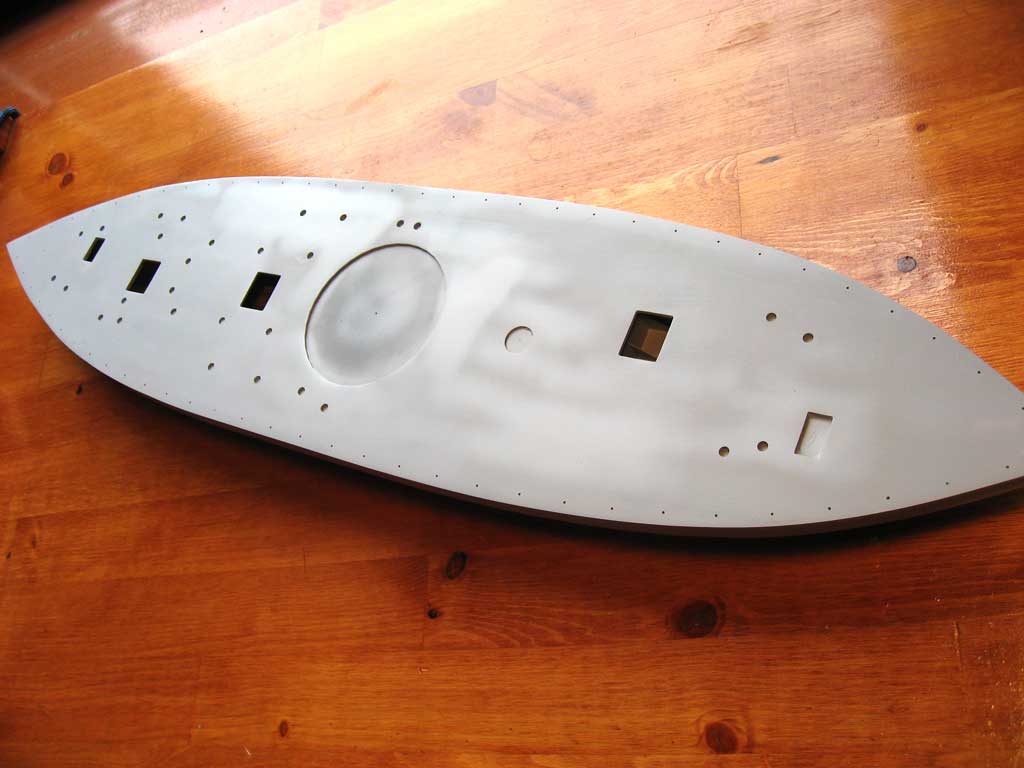
contrastWith my final paper of the semester turned in, I’ve decided to clean up some stories to send out (sent out two this very day) and work on some models. I’m still at it with the USS Weehawken. It seems like I’m just not making any progress. This part of a build always seems like that. You fill, prime, sand, repeat. And repeat. And repeat. One interesting thing that I found was the visual effect in the first photo. The last time I primed I got lazy and just hit the areas I had sanded. The contrast of old and new primer gives a great textured effect. It’s something I’ll be repeating — in a more controlled manner — when I do the final painting, so it’s great to see a preview of what can be accomplished. Now it’s time for me to scribe all of the armor plating lines onto the deck. That will be quite an undertaking, and one I’ve been putting off.

engineering

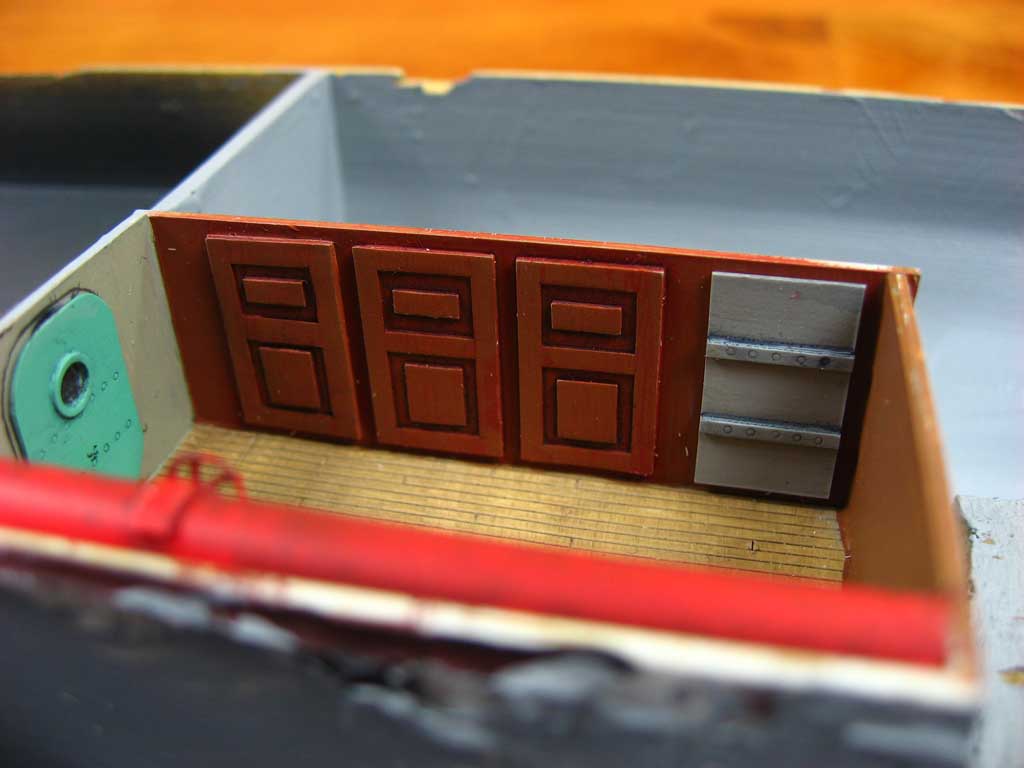
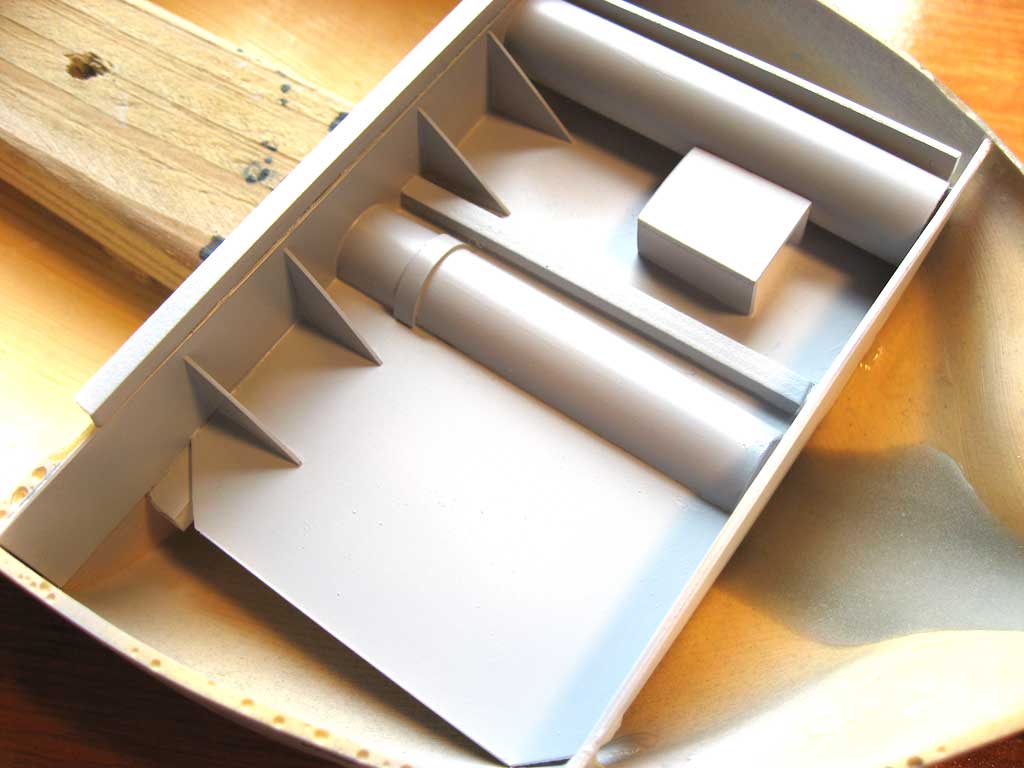
The second photo is of an interior space. I’m opening up the hatches on Weehawken, so I go to the plans and see what’s under these hatches. The after-most lists it as “engineering” and nothing more. Going off of a paper model of the original USS Monitor, I knocked out this quick bit of plastic gibberish. Once it’s painted, weathered, and viewed through the small 1″ X 1″ opening in the deck, it’ll look just fine.

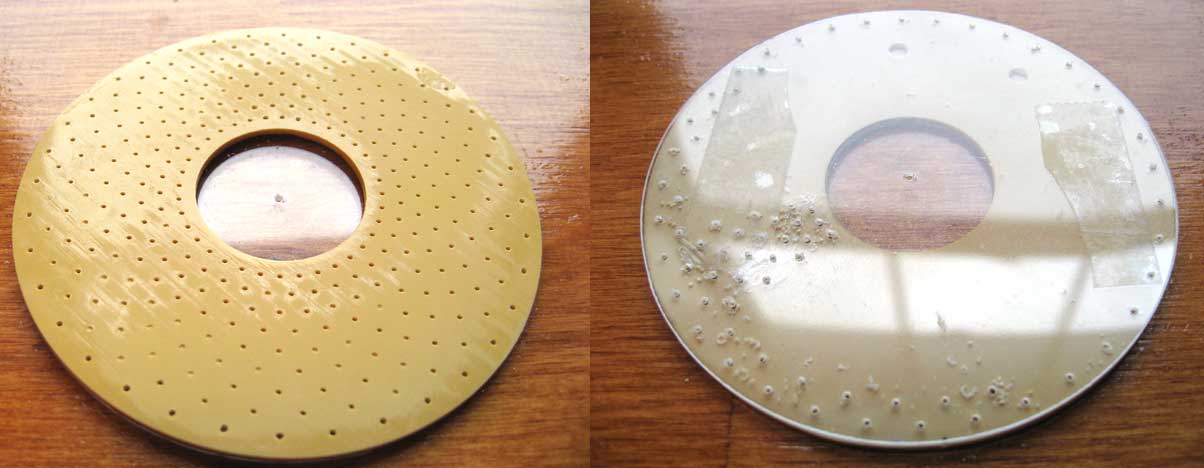
roof I’m replacing certain parts of the Weehawken kit. This shot is a before and after (well, an in-progress). The turret roof is supplied in a circle of perforated resin. I’m putting a lot of detail in this turret, so I’ll be replacing it with a clear piece of plastic. I’ve used double-sided tape to attach the plastic replacement to the resin original, and now I’m drilling through the resin perforations, using it to transfer the pattern over to the clear part. Tedious.

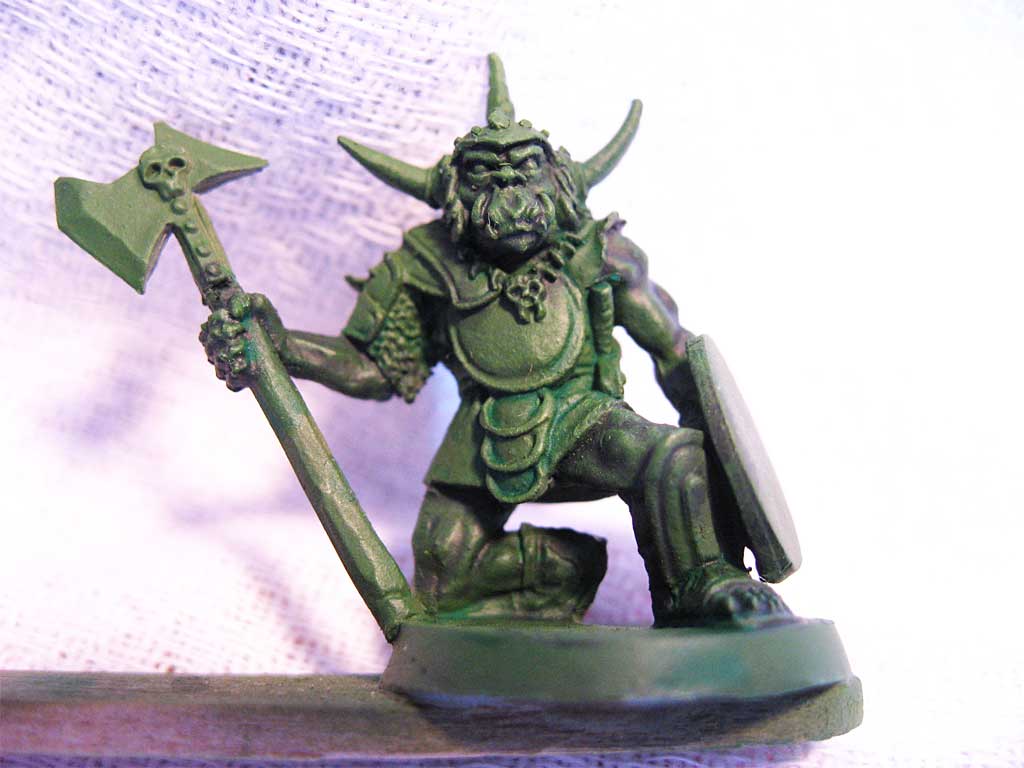
And finally, this green guy. It’s a white-metal Dungeons and Dragons gaming figure, about 1.5″ tall, and still very much in-progress. I found him whileOrc cleaning up a few weeks back and figured he’s a good piece to practice with the Vallejo paints I’ve recently started using (they rock), and it’s a piece I can finish in a relative short period of time. Sometimes it’s good to just finish something, even if it isn’t that big of an undertaking — I guess that’s why I write short stories as well.

Picking a Subject: USS Weehawken

So, I continually try to figure out why I write what I write and why I build the models that I build. And recently, more often than not, I’m finding out that whatever the subject, my interests in the two mediums are often closely related.

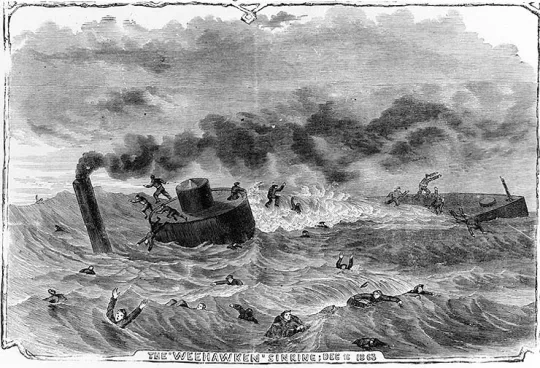
My current modeling project is a 1/96th scale resin kit of the USS Weehawken. She was an American Civil War monitor. I’ll get more into her history later as I talk about building the kit. But for now all you need to know is she was one of the most powerful warships of the period and she sank. She did not sink to enemy fire, but to weather and waves many would not consider rough. During an ammunition onload someone failed to properly distribute the heavy iron shot, leaving her out of trim and down by the head. On 6 December 1863 she sank in “choppy” water. She took a few waves over the bow and went down within minutes. Between 24 and 30 men of her 70+ crew drowned in water so shallow that nearly one-quarter of her stack was reportedly sticking above the waves after she settled on bottom.

I’ve always been intrigued by this story. I guess it’s a fairly common one of technology being overcome by nature, but it pulled me in so much that I started writing my own fictionalized version of the sinking. Who was responsible for not stowing the ammunition properly? Even with that, was there someone asleep at the pumps that could have stopped the disaster? (Actually they couldn’t have. An engineering “feature” of these ships had all of the pumps aft in the engine room; useless in Weehawken’s bow-down attitude.) I began conjuring images of a man tormented by the heat of these steel ships in Southern waters, the thud of enemy cannon balls striking the hull, the thick smoky air. And, what the hell, maybe he thought there were mermaids just through the thin hull beckoning him out into the cool waters. I wrote a few paragraphs.

The words lead to a desire to build a kit of the ship.  I got luck, someone actually made a kit. That’s always a plus. I have little room to scratch-build at this time. And I found it cheap on eBay! Another plus. I could have built this model as any of the other ships of the Passaic class, even ones that survived into the 20th century, but I chose Weehawken. I started cleaning up the hull and planning the build as I worked on the story. With work and school I have to share time between building and writing, so some evenings I sit with my laptop, others I fill the house with the smell of resin dust and primer. When I build a model I do a lot of research, and I do the same when I write about a historical subject. Now I was killing two birds, so to speak, and I was all about Weehawken. The darkness of her demise and the oddity of it pulled me to her.

The building progressed, but then I lost interest in the story. It wasn’t going anywhere after those initial few pages and I had recently written two war themed pieces. Another one seemed a little much at the time.  But as I found my interest in the words on the wane, my interest in the model was growing.

I’m currently more than half-way through the build, and now that I can lay my hands upon an approximation of her hull, see where the water came in, and imagine the death rattle of steel and equipment subsiding into gurgling seawater.  The story starts to come back to me. No one has ever accused me of being drawn to cheerful stories, and the model, a solid material focus, makes the images I conjure in my mind more real.  Solid.

One day I’ll come back to my story of the Weehawken. Until then, the subject continues in a different medium, for the time being.