Category Archives: Writing

Oops, I broke it

While the above title is very applicable to modeling, this time I’m talking about a story.

A writing group can be a blessing and a curse. Being in Altered Fluid is definitely more of the former than the latter, considering all of the great writers I get to work with, and all of the friendships that have grown out of the group, but sometimes it can cause issues with the writing process.

Example: I’ve got this story I’ve been working on for, no kidding, ten years, off and on. I pull it out from time to time, work on it a bit, and then put it away for a while. The writing group has seen it once before, and with the recent armada of pirate anthologies coming about, I gave it another go. It’s a piece set on a privateer during the War of 1812. Not pirates, but close, and unique enough that I thought I’d have a shot. The group read it, gave me suggestions, and I ran with it.

That’s when the problems started. While editing it again for submission, I ran up against two issues. One was trying to implement all of the suggestions. For some reason I forgot they are just that: suggestions. Sometimes when I think I’ve got something that’s close, I can get in the mindset that I need to just do what the other members of the group say. Hell, they are published writers, after all.

The second problem was word count. I was two thousand words over what was stated on the submission guidelines. So I started cutting and hacking at it. Completely removed the beginning that I was fond of. Cut down on the ending, back story, etc.

I sent it out. It was still long, but the pub said they were interested in the concept and maybe they’d have room for it.
I just got the rejection notice this week. They liked it, but in the end it was just too long, and maybe it would benefit from putting back the pieces that I mentioned I’d cut.

So I read it. And I didn’t recognize it. What was this? I didn’t write this, surely. Well, the plot was there, but it was so, well, stripped of any essence, flavor, or color. Essentially it was an elongated outline of the story I had originally written, and it just wasn’t as good. I had taken a story that I really liked and tried to change it so that everyone else would like it, and now the only person that needed to be happy with it — me — didn’t like it.

Every writer has seen this, I’m sure. Taking a story you like and compressing it or stretching it, changing characters, plot points, anything, to try to make it fit a market. It is in no way a situation unique to me, but this is the first time I’ve really noticed myself doing it. What’s the fun of being an unpublished writer if you’re not going to write the way you want to? Don’t get me wrong, I’m not being as arrogant to say “I’m glad they didn’t want it. I didn’t want them to have it anyway!”. That’s crazy talk. I’d have been happy to make a sale, but since I didn’t, I am glad that I now get a chance to work on this some more.

And so my story goes back into the chest for a little while longer. Not too long, though, as I do really like what I’ve got there, and I’ve already done some tweaking on the previous draft. Already it does a much better job of conveying the story I want to tell, and it is doing it in the way I want it to.

It’s broke for now, but already looking better, and the next time I’ll try to listen to my inner voice a bit more and the outer ones a bit less.

Tuning In

Mic

Last Saturday was the previously mentioned Altered Fluid appearance on Hour of the Wolf. A good time was had by all, and we even took some calls from a few colorful characters. You can listen to an MP3 PodCast of the broadcast on the Altered Fluid website.

One thing I took from the show this time – other than the fact that I’m in a group with a lot of damn talented people, but I already knew that – is the real difference there is when hearing a story read aloud by the author. It can lead to a completely different interpretation of the piece by the audience. I still firmly believe that the written words on the page, those the reader encounters when there is no other voice around to inform and instruct them, is the final form of a story and the one that simply must get the tale across. But, after hearing David read last Saturday morning, and after my own reading at The New School last Wednesday when I found myself switching around words on the fly, I’ve come to realize that a story isn’t necessarily confined by those words on the page. If a reading can bring a different interpretation, give the reader a new angle on the story, then what’s wrong with that? At the core, an individuals interpretation of writing and the reading is what the entire process is about. Reading aloud just adds a new dimension to something we might believe we know everything about.

I wonder if Cormac McCarthy will be doing any readings in the future?

Sleepy Like the Wolf

Yawn

No, the title does not refer to a new geriatric remake of the classic Duran Duran tune. I and the rest of Altered Fluid will appear this coming Saturday the 5th on Jim Freund’s show “Hour of the Wolf” on WBAI radio. The show’s on 5-7 a.m. Listen if you’re up, and if not, they will have a PodCast-esque version of the show available later in the day.

This time on the chopping block, Mercurio D. Rivera’s story “The Fifth Daniel”.

If you haven’t checked it out yet, our last appearance is available for download on my Writing page.

Interview Online

Reading

Matt Kressel has posted the interview I did with Stephen Segal for Sybil’s Garage No. 4. Check it out. It seems odd for me to take credit for this as an official “interview”, as the questions are simply based off of conversations Stephen and I have been having since we first me two years ago.

My only regret is that one of my questions may imply that I consider Cormac McCarthy’s Pulitzer winning THE ROAD as science fiction. It is, of course, nothing of the sort.

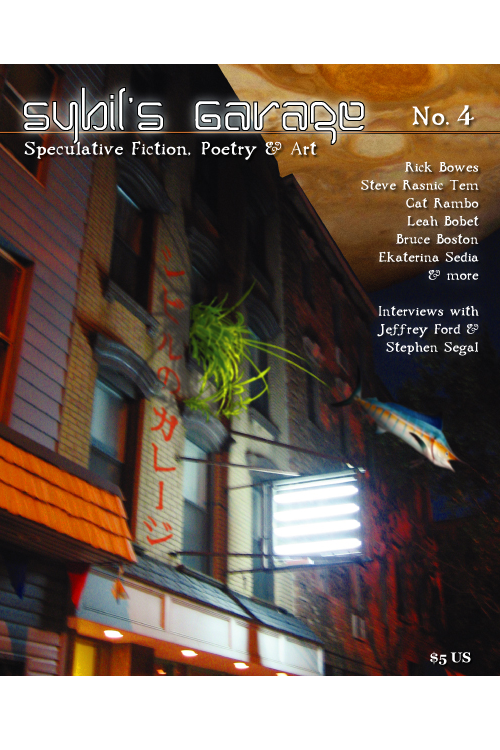
Sybil’s Garage #4

Sybil’s Garage No. 4 has been released. Besides doing the general slush reading and corresponding on the stories we received, I also conducted an interview with Stephen Segal of Wildside Press. Stephen has some great ideas on the business of speculative fiction and media in general, and I think anyone interested in the genre will get something from what he has to say.

On the story front, of us who act as editors at Sybil’s get very involved in the story selection process. While we were open for submissions this past issue I found myself exceptionally busy with school and work, so I still have not read most of the content of this issue. I can say, however, that I was lucky enough to be assigned as the first reader for “Seas of the World” by Ekaterina Sedia. It’s one of the best stories I’ve read in a long time, and I was really pleased when it was placed in the issue. An incredible piece of writing from a fellow ‘Jersyian (is that even a word?).

Matt Kressel has done a kick ass job on the cover and layout of this issue. Past issues looked great, but this one is truly a monumental step forward.

The table of contents:

Fiction
“After the War” by Leah Bobet
“On Death and the Deuce” by Richard Bowes
“Pairings” by John Bowker
“Means of Communication” by Barbara Krasnoff
“Jetsam” by Livia Llewellyn
“An Appetite for Love” by Cat Rambo
“Seas of the World” by Ekaterina Sedia
“Translucence” by Rowena Southard
“Strangeness” by Steve Rasnic Tem

Poetry
“Arrive on Time,” by Bruce Boston
“If the Shoe Fits,” by Aurelio Rico Lopez III
“Frayed Worlds,” by David C. Kopaska-Merkel & Wendy Rathbone
“Farewell,” by Jaime Lee Moyer
“One of the Reasons,” by Kristine Ong Muslim
“The Answer Compounded,” by J.C. Runolfson
“Disparate Parts,” by Rachel Swirsky
“Flesh into Sand,” by JoSelle Vanderhooft

Interviews
Jeffrey Ford interviewed by Matthew Kressel
Stephen Segal interviewed by Devin Poore

Picking a Subject: USS Weehawken

So, I continually try to figure out why I write what I write and why I build the models that I build. And recently, more often than not, I’m finding out that whatever the subject, my interests in the two mediums are often closely related.

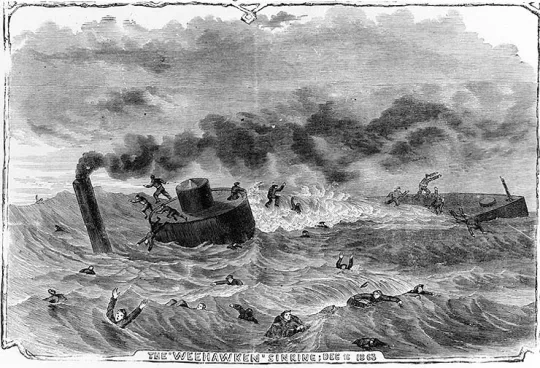
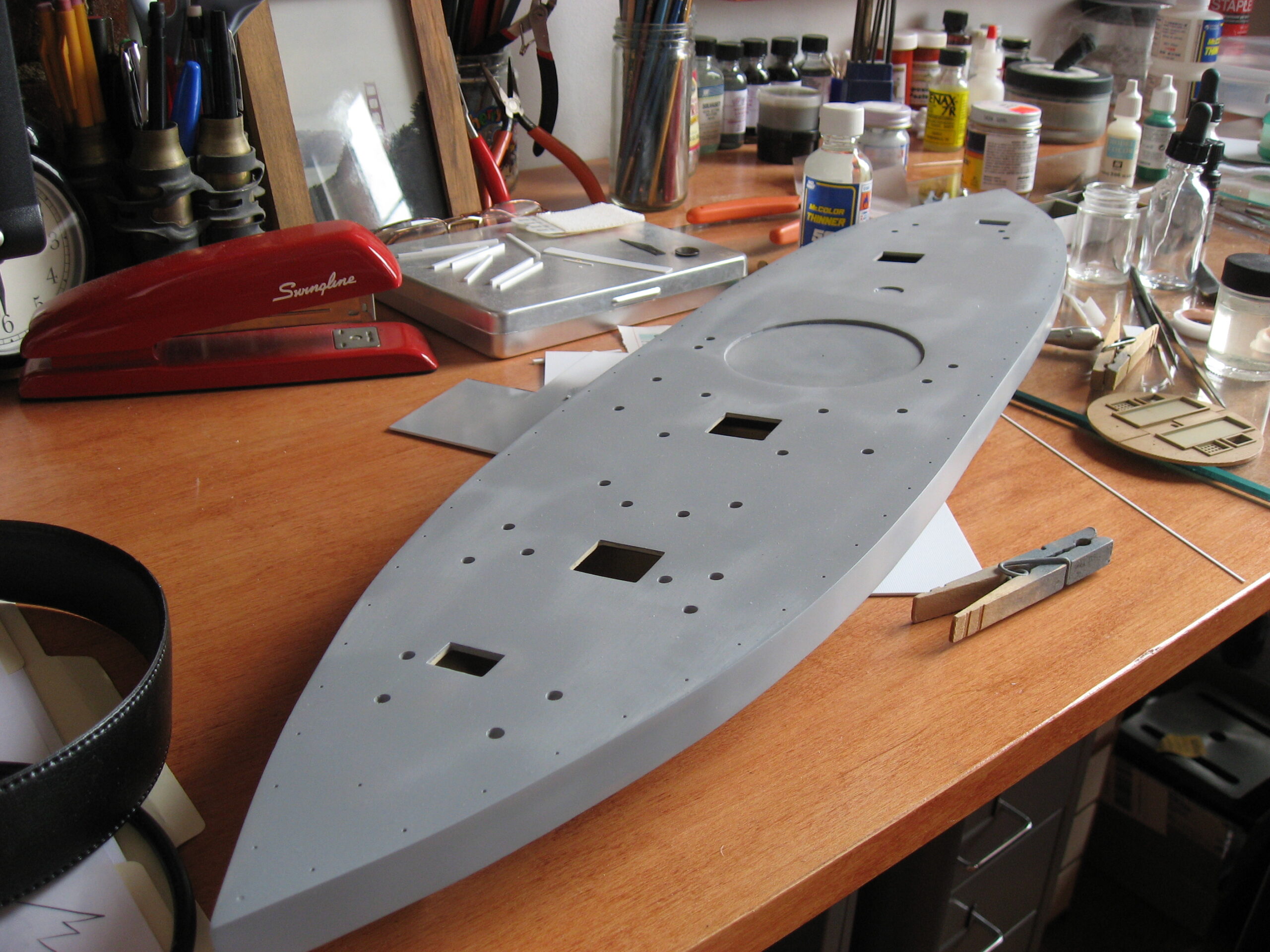
My current modeling project is a 1/96th scale resin kit of the USS Weehawken. She was an American Civil War monitor. I’ll get more into her history later as I talk about building the kit. But for now all you need to know is she was one of the most powerful warships of the period and she sank. She did not sink to enemy fire, but to weather and waves many would not consider rough. During an ammunition onload someone failed to properly distribute the heavy iron shot, leaving her out of trim and down by the head. On 6 December 1863 she sank in “choppy” water. She took a few waves over the bow and went down within minutes. Between 24 and 30 men of her 70+ crew drowned in water so shallow that nearly one-quarter of her stack was reportedly sticking above the waves after she settled on bottom.

I’ve always been intrigued by this story. I guess it’s a fairly common one of technology being overcome by nature, but it pulled me in so much that I started writing my own fictionalized version of the sinking. Who was responsible for not stowing the ammunition properly? Even with that, was there someone asleep at the pumps that could have stopped the disaster? (Actually they couldn’t have. An engineering “feature” of these ships had all of the pumps aft in the engine room; useless in Weehawken’s bow-down attitude.)I began conjuring images of a man tormented by the heat of these steel ships in Southern waters, the thud of enemy cannon balls striking the hull, the thick smoky air. And, what the hell, maybe he thought there were mermaids just through the thin hull beckoning him out into the cool waters. I wrote a few paragraphs.

The words lead to a desire to build a kit of the ship. I got lucky, someone actually made a kit. That’s always a plus. I have little room to scratch-build at this time. And I found it cheap on eBay! Another plus. I could have built this model as any of the other ships of the Passaic class, even ones that survived into the 20th century, but I chose Weehawken. I started cleaning up the hull and planning the build as I worked on the story. With work and school I have to share time between building and writing, so some evenings I sit with my laptop, others I fill the house with the smell of resin dust and primer. When I build a model I do a lot of research, and I do the same when I write about a historical subject. Now I was killing two birds, so to speak, and I was all about Weehawken. The darkness of her demise and the oddity of it pulled me to her.

The building progressed, but then I lost interest in the story. It wasn’t going anywhere after those initial few pages and I had recently written two war themed pieces. Another one seemed a little much at the time. But as I found my interest in the words on the wane, my interest in the model was growing.

I’m currently more than half-way through the build, and now that I can lay my hands upon an approximation of her hull, see where the water came in, and imagine the death rattle of steel and equipment subsiding into gurgling seawater. The story starts to come back to me. No one has ever accused me of being drawn to cheerful stories, and the model, a solid material focus, makes the images I conjure in my mind more real. Solid.

One day I’ll come back to my story of the Weehawken. Until then, the subject continues in a different medium, for the time being.