 I’d never really thought about wedding rings much before. But, after getting engaged, it dawned on me that I might need one. Tradition and all that. I’ve had friends that had custom made items that look like the One Ring from “The Lord of the Rings” books, friends who wear family heirlooms, and others who have bought antique jewelry to suit their purposes. I came to realize fairly quickly that I wanted something historical to wear, something with some time behind it. I’ve always been interested in what once-was, and at the time of my shopping for a ring, I was well into my research period for a Civil War novel. I’d been spending a lot of time in Gettysburg.
148 years ago this past Saturday, Abraham Lincoln delivered the Gettysburg Address to officially dedicate the Soldier’s National Cemetery in Gettysburg, PA, four months after the famous battle of 1863. The speech is noteworthy both for its historical significance, as well as its literary importance; very rarely have so few words said so much.
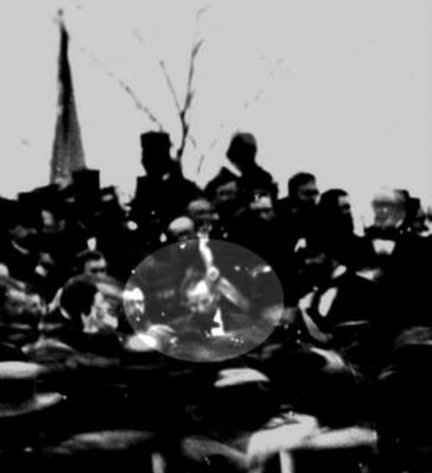
Edward Everett was the first to speak at the dedication and spoke for nearly two hours, and so, when Lincoln then stood to deliver his address, the photographers were prepared for another long presentation. They were caught off guard when Lincoln delivered his under-three hundred work piece in mere minutes. As such, there is only one known photo of Lincoln during the ceremony, shown below. Lincoln is highlighted in the very center, just sitting down after speaking.
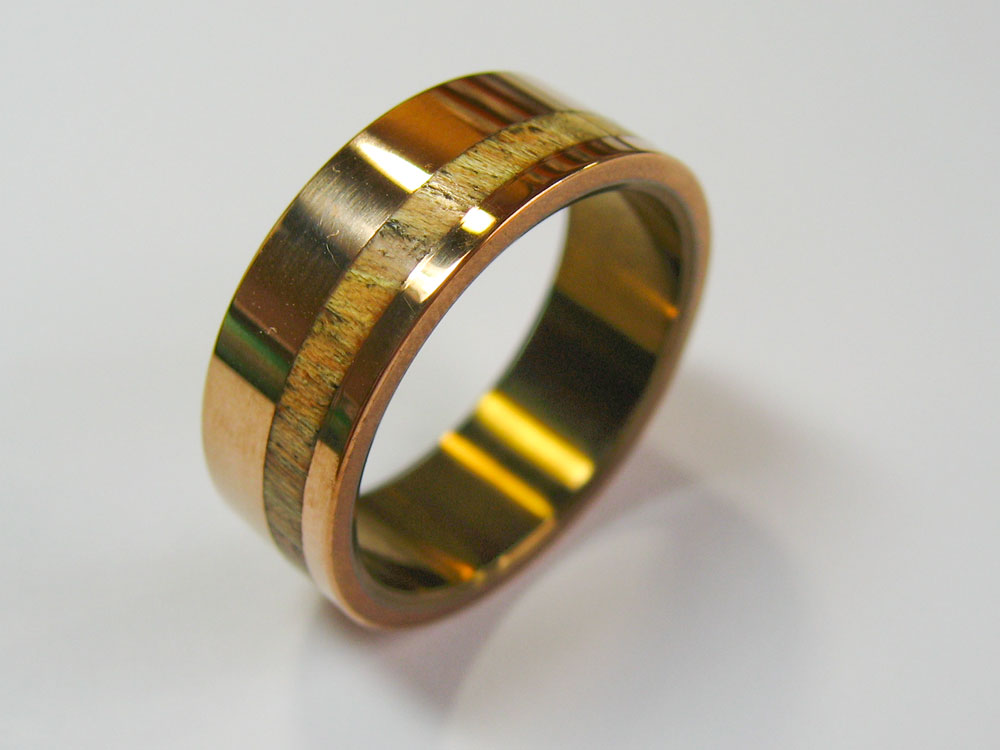
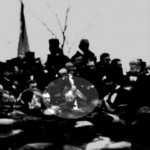 My interest in the photo and the speech, for this post, though, is not on Lincoln. See the small tree in the background of the photo? That tree still stands in the cemetery in Gettysburg. In 2008 a storm brought down a large portion of it (it still survives, though, and is even showing new growth), and I was able to acquire part of it (Thanks, Bill!). Through a friend’s recommendation, I found Minter & Richter Designs on Etsy. A few emails were exchanged, I sent them the wood sample, and after various discussions and a few weeks time, they delivered my bronze-sheathed ring, with an inlay of wood from that tree that watched Lincoln speak 148 years.
The ring has developed a nice patina since the above photo was taken, and the bronze blends very well with the wood inlay. I’ve since moved on to other projects and and haven’t had the time to visit Gettysburg for the past two years, but it is nice to carry with me a piece of such a momentous historical event. Oh, and it’s nice to be married, too.
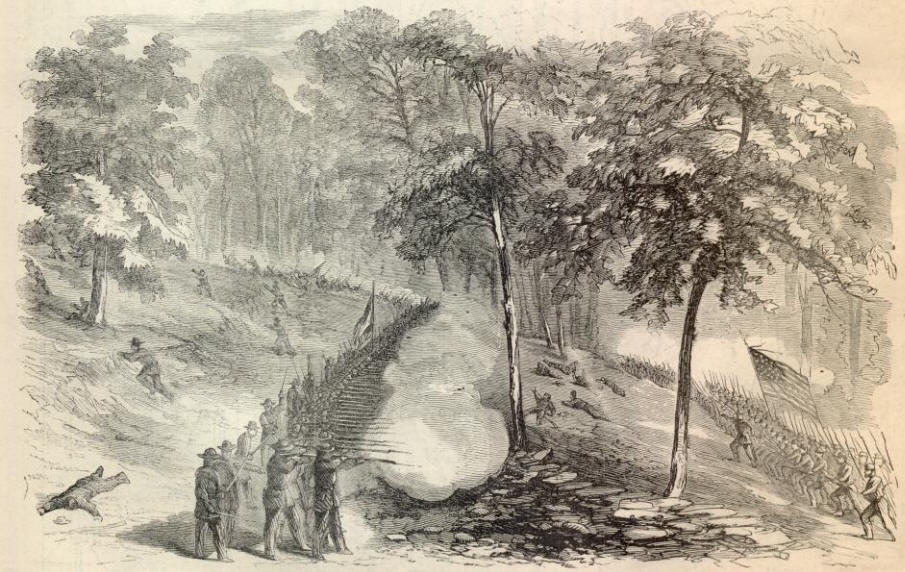 The Battle of South Mountain is obscured and ignored by history, so much so that it’s difficult to write about it. The reason to bring it up in discussion of the Iron Brigade is that they earned their permanent moniker during the battle. While that happened, men fought there, died there. No small skirmish — large portions of both the Union and Confederate armies engaged throughout the day of September 14th in and around the three mountain passes named Fox’s, Crampton’s and Turner’s gap, the battle claimed over 2300 Union and 2600 Confederate casualties.