A Cool Find

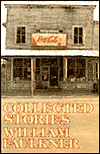
Faulkner Collection I’ve been a fan of Faulkner’s work for some time now. His body of work is such that it’s taken me years to get through a good chunk of his stories. I’ve never considered him a spec writer, even though his story “A Rose for Emily” qualifies as horror of the highest level, especially considering the era. While reading “Collected Stories” recently, I found another piece by Faulkner that delves into the realm of speculative fiction: “Beyond”. Some will probably read it and roll their eyes at what has become a common spec trope (no, I’m not saying what it is, go read it!). But, for its day, and with Faulkner’s finesse thrown in, I really enjoyed it.

That’s it. I’ve felt guilty for not posting recently, a consulting gig has kept me away from writing and doing much of anything else for three weeks now, and I felt I should at least make an attempt. Said gig ended yesterday, though, so now it’s back to the real work of the next few months.

Tools of the Trades

tools

I’ve been doing a home improvement project these past few weeks, and the process has got me to thinking about tools. That Black and Decker mouse sander; it looked like a toy when my parents gave it to me a few years back, but that thing has saved me so much time and energy. Laser levels, jigsaw, drill press. I’ve used them all over the past month. And when it comes to modeling, forget about it. I’ve got enough files, knives, and airbrushes to populate a small hobby shop.

Ever since reading King’s “On Writing”, I tend to think of writing habits and tricks as tools. He builds on the whole metaphor of a toolbox throughout much of that text. I won’t go into the details because I think most writers are at least aware of that book, but if you haven’t read it do yourself a favor and pick it up sometime.

In that light, I picked up a new writing tool recently. Outlines. To me the word conjures images of small junior high school desks and desperately trying to think of a research paper topic. But, it seems that there are writers who swear by them. I prefer the so-called “organic” approach, where the writer gets an idea and some characters in an initial situation and then simply writes and sees what happens. That isn’t to say that I don’t have an idea of where my stories are going; I usually have an idea of the final scene of a story and writing becomes an exercise in seeing if I can get there. My novel started as a Coca-Cola and Fritos induced dream of the final chapter, but the path to that final scene was completely unknown to me.

As such, I’d never given outlines much thought. But then as I began to edit more and more stories, I discovered what I called the “post-outline”. I started it with my novel; took it out and did a chapter-by-chapter and scene-by-scene breakdown in outline form. I was surprised how much easier it made it for me to think about the piece and what I wanted to change in it. Everything’s right there in front of you.

“Well of course it’s right there in front of you, dufus,” some of you are saying. It’s just one of those things that never occurred to me until I actually did it for myself. It’s a great tool to be able to read through a story’s outline and move around single-sentence scene descriptions to see how they mesh in different ways. It also allows me to move around scenes, something that was verboten in my mind before this process came along – chapters were constructed as such and not to be tampered with. In the past two weeks I’ve had a major breakthough on one short story and in my novel revisions, because I now allow myself to move scenes around, because I can see the bigger picture all at a glance.

Since I discovered this for myself I have found out that it is in no way an original idea (I’m just great at re-inventing the wheel). Evidently Nancy Kress has been quoted as saying that a novel’s first draft is nothing more than a wordy outline, and at ReaderCon this year I attended a panel on storyboarding that put forward the outlining method as a good troubleshooting tool for completed pieces. The ReaderCon panel was also especially helpful with my chapter stigma. Simply don’t use them, they say. And after using the outlining method, and seeing how Dan Brown constructed “The Da Vinci Code” with what are essentially sequences of scenes and no chapters, I can see the merit.

So I have a new tool. It’s not as shiny as the airbrush I purchased last month, but hopefully it’ll be just as useful.


A Few Photos

Gong

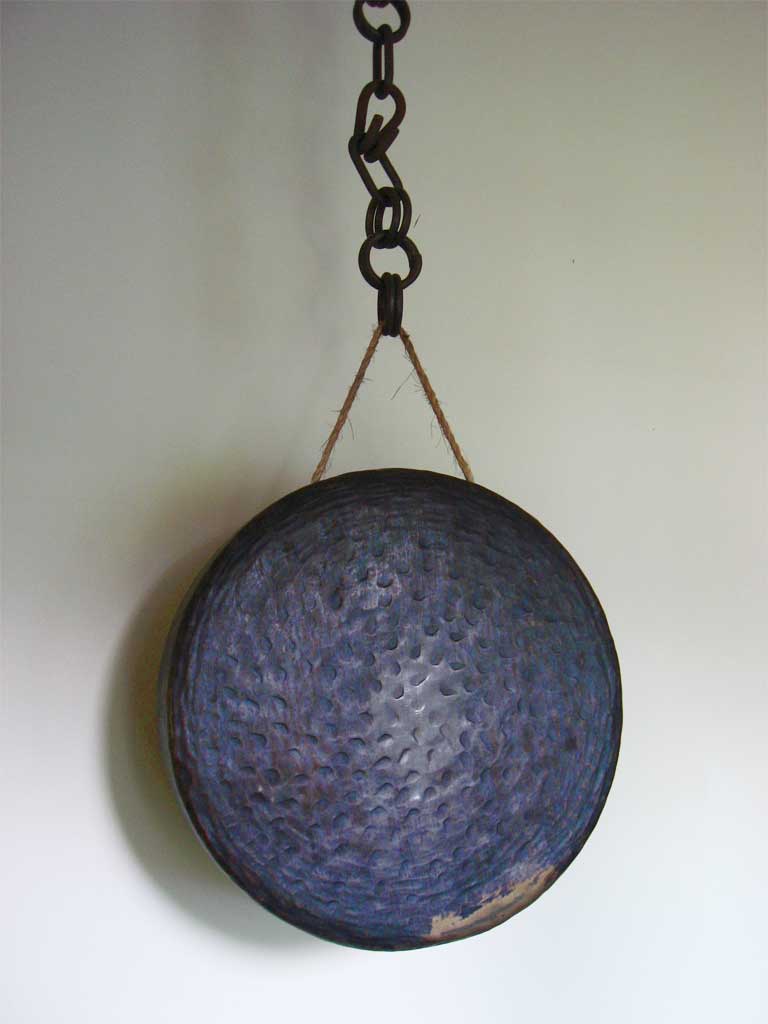
Last weekend I spent a few days visiting Kristen at the Dai Bosatsu Zendo, (she spends a month up there every summer getting all Zen’d up). A beautiful and relaxing place. I had my small Canon SD700is camera with me and took some shots as we walked the grounds and monastery.

I have recently upgraded to Photoshop CS3 and am still learning the new “features”. I think I might have compressed these photos too much and lost some detail, but you can get the general idea.

bee beetle

lakeleaf

rock yello

On Photography and Paranoia

Empire I’ve kept a low profile this weekend. I grabbed lunch early yesterday at my favorite Cuban place in Hoboken and then hit the local Barnes and Noble to pick up Harry Potter 7. Yes, I’m one of those people. And to avoid having some dolt spoil it for me, since then I’ve been holed up in the condo or up on the deck, reading, and avoiding the internet and television. Yesterday evening about dusk I I heard from a party going on a few houses away “Did you hear about the new Harry Potter…?” I promptly ran inside and plugged my ears. Then this morning, while watching the news for a few moments, I slammed off the TV’s power when what was probably a piece on Harry Reid started, but I wasn’t taking any chances. I’m a little more than half-finished.

In other news, I finally caved and bought my graduation gift to myself last week: a Canon Rebel XTI (aka the 400D) DSLR camera. It’s my first SLR, and there’s a serious learning curve. With the help of some lenses that a friend lent me (thanks, Alex!) I’ve been puttering around a bit, but I have no idea what I’m doing. I have the above required shot of the skyline from our deck above. Also, a most unusual shot of a Boeing B-17* that flew over yesterday morning. No idea where she was from or what she was doing over Manhattan, but she was a very cool sight and the sound of those four radial engines reminded me how I need to get to an air show sometime in the next year or two. I was able to shoot the photo at max zoom and crop down what you see. Not very clear, but clearer than I could have got with my other cameras, and proof that I wasn’t imagining things.

That’s all I have. My seclusion continues. Good thing I don’t currently have a job to drag me out tomorrow!

(*for those who do not know, the B-17 Flying Fortress is a WWII U.S. bomber, and therefore quite rare. I’ve seen this one in the airspace around Manhattan a few times before, so she must be based out of Long Island or Connecticut)

ReaderCon 18

ReaderCon ReaderCon 18 was this past weekend, and a good time as always. I found myself doing more socializing than attending panels this year, but still got some good information from the people in the know. A few things that I learned and/or was reminded of:

1. Evidently I take offense at a college professor not knowing the difference between a second-person POV, and a third-person POV which happens to use the word “you” a lot. It bothers me enough to make me walk out on a panel, and then be teased about it for the rest of the weekend.

2. An editor/writer that you admire will sometimes reject your story even if he likes it.

3. A re-write can do wonders. I heard Leah Bobet read her piece “After the War” from Sybil’s #4 and was blown away by it. (It also happens to be a wonderfully done second-person POV). I remember when it was first sent to the magazine I was one who argued AGAINAST taking it (not for quality reasons, but some political and historical ones). The printed/read version addressed all of my qualms and really touched me as a veteran.

4. Evidently I am not the only writer who is a little freaked out by potentially having their stories critiqued by a puppet. (“Crap, she has the sock puppet out. That thing just doesn’t get my subtext.”)

5. Even after TWO FREAKIN’ YEARS, those who play Mafia at ReaderCon will not let me forget that I helped out Johnathan Lethem in a particular game. Come on guys. Two years. Seriously.

That’s all I got. Much better coverage can be found from Matt Kressel, and Paul Tremblay. I’ll add more posts here as I find them.

Ouch

accupuncture

“I hear you just finished your writing degree,” she said and took my pulse.
“Yeah. Finished a couple of weeks ago. At The New School,” I replied.
“Hmmm,” she said and nodded. “I got a creative writing degree there about ten years ago. Now I do this for a living.”
Isn’t an acupuncturist supposed to make you feel relaxed, not cause you to question your life decisions? I guess I should get used to it.
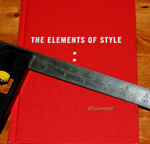
But other than that, things are going well. Had a graduation party over the weekend that Matt Kressel was good enough to post some photos of. I got some very cool gifts that will help immensely with the writing process: an illustrated Strunk and White, a retro ink pen, a ream of printer paper inscribed with the touching words “get to work bitch!”, and – what every writer needs – several bottles of excellent quality tequila.
I think I’ll get to work.


Moving on…

Door

Okay, stop me if you’ve heard this one:

A 37 year old guy who hasn’t made one red cent on his writing decides to quit his full-time, well paying job, and work on his writing.

The punch line? Not really sure yet. See, it isn’t so much a joke, a story, or even an anecdote. At least not yet. It’s what I’m doing. Last week I put in my notice at my job. I’m taking a few months off to write.

Next week I take my final class for my bachelor’s degree. After 16 years of work, off and on, I am finally finishing. I go back and forth between being embarrassed about how long it has taken, and just being relieved and feeling like it’s a major accomplishment.

The past several years I’ve been focusing on creative writing and literature classes. Not the most practical courses for someone who works in the computer field, but it’s something I wanted to do. Much like taking this time off. It doesn’t make sense, but this is one of the few times in my life where I’ve decided I want to do something for myself and am actually following through with it. My life has been a series of things I have to do, need to do, and just happened to do.

No one should get the idea that I think I can make a living as a writer just yet. But I do want to give the impression that my writing has improved in the past year or two and that what I’m doing now is pretty good. And if I’ve just spent all this time and money (holy crap, the money!) on this degree, I owe it to myself to spend a few months doing the writing thing. While I’m writing, though, the resume’s will be going out as well.

Two more weeks at work and then it’s all about writing. Models, household stuff, photography, but mostly about writing. I’m going to go back to the Stephen King plan of 2,000 words a day 5 days a week (Stephen actually recommends 2k words EVERY day, but I think everyone realizes he’s a machine). I’ve got a couple of short stories to finish cleaning up, and two agents are waiting for me to send them the first fifty pages of my novel “Copper and Kerosene”. After that housekeeping is done — and I’m actually going to try to get a lot of that done within the next few weeks — then I’m starting my second novel. Hell, I figure that the only thing an agent would like better than a finished novel is two of them.

Money is going to be tighter, and Kristen will probably freak out a few times (but she’s happy for me and said it’s a great idea; further proof that I picked a good woman, or maybe a good woman picked me) but that’s nothing that hasn’t happened before. I get to spend some time focusing on what I want to do, what I think is important for me, and I plan on enjoying it for however long it lasts.

So, a 37 year old guy who hasn’t made one red cent on his writing decides to quit his full-time, well paying job, and work on his writing.

The punch line? Not really sure yet. I’m working on it.

Sign of the Season

SwinglinesYou can be certain that warm weather has arrived when the new crop of red Swingline staplers start showing up in Hoboken. Here’s a triple-shot of some I completed this past weekend.

Oops, I broke it

While the above title is very applicable to modeling, this time I’m talking about a story.

A writing group can be a blessing and a curse. Being in Altered Fluid is definitely more of the former than the latter, considering all of the great writers I get to work with, and all of the friendships that have grown out of the group, but sometimes it can cause issues with the writing process.

Example: I’ve got this story I’ve been working on for, no kidding, ten years, off and on. I pull it out from time to time, work on it a bit, and then put it away for a while. The writing group has seen it once before, and with the recent armada of pirate anthologies coming about, I gave it another go. It’s a piece set on a privateer during the War of 1812. Not pirates, but close, and unique enough that I thought I’d have a shot. The group read it, gave me suggestions, and I ran with it.

That’s when the problems started. While editing it again for submission, I ran up against two issues. One was trying to implement all of the suggestions. For some reason I forgot they are just that: suggestions. Sometimes when I think I’ve got something that’s close, I can get in the mindset that I need to just do what the other members of the group say. Hell, they are published writers, after all.

The second problem was word count. I was two thousand words over what was stated on the submission guidelines. So I started cutting and hacking at it. Completely removed the beginning that I was fond of. Cut down on the ending, back story, etc.

I sent it out. It was still long, but the pub said they were interested in the concept and maybe they’d have room for it.
I just got the rejection notice this week. They liked it, but in the end it was just too long, and maybe it would benefit from putting back the pieces that I mentioned I’d cut.

So I read it. And I didn’t recognize it. What was this? I didn’t write this, surely. Well, the plot was there, but it was so, well, stripped of any essence, flavor, or color. Essentially it was an elongated outline of the story I had originally written, and it just wasn’t as good. I had taken a story that I really liked and tried to change it so that everyone else would like it, and now the only person that needed to be happy with it — me — didn’t like it.

Every writer has seen this, I’m sure. Taking a story you like and compressing it or stretching it, changing characters, plot points, anything, to try to make it fit a market. It is in no way a situation unique to me, but this is the first time I’ve really noticed myself doing it. What’s the fun of being an unpublished writer if you’re not going to write the way you want to? Don’t get me wrong, I’m not being as arrogant to say “I’m glad they didn’t want it. I didn’t want them to have it anyway!”. That’s crazy talk. I’d have been happy to make a sale, but since I didn’t, I am glad that I now get a chance to work on this some more.

And so my story goes back into the chest for a little while longer. Not too long, though, as I do really like what I’ve got there, and I’ve already done some tweaking on the previous draft. Already it does a much better job of conveying the story I want to tell, and it is doing it in the way I want it to.

It’s broke for now, but already looking better, and the next time I’ll try to listen to my inner voice a bit more and the outer ones a bit less.