F4U-1 Corsair: Markings

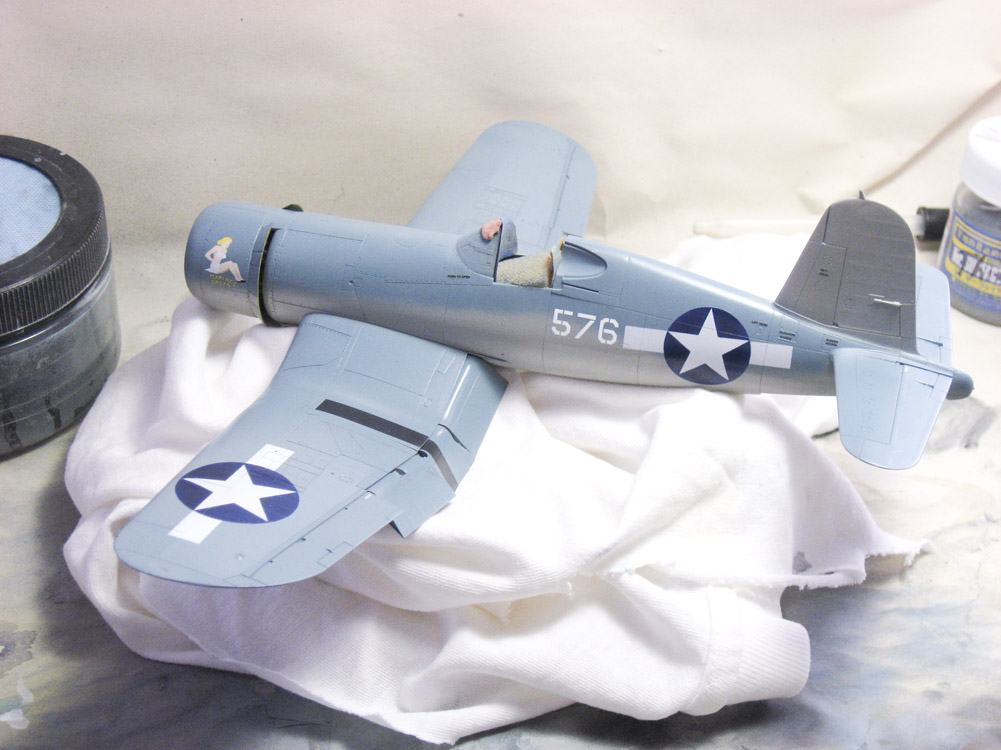
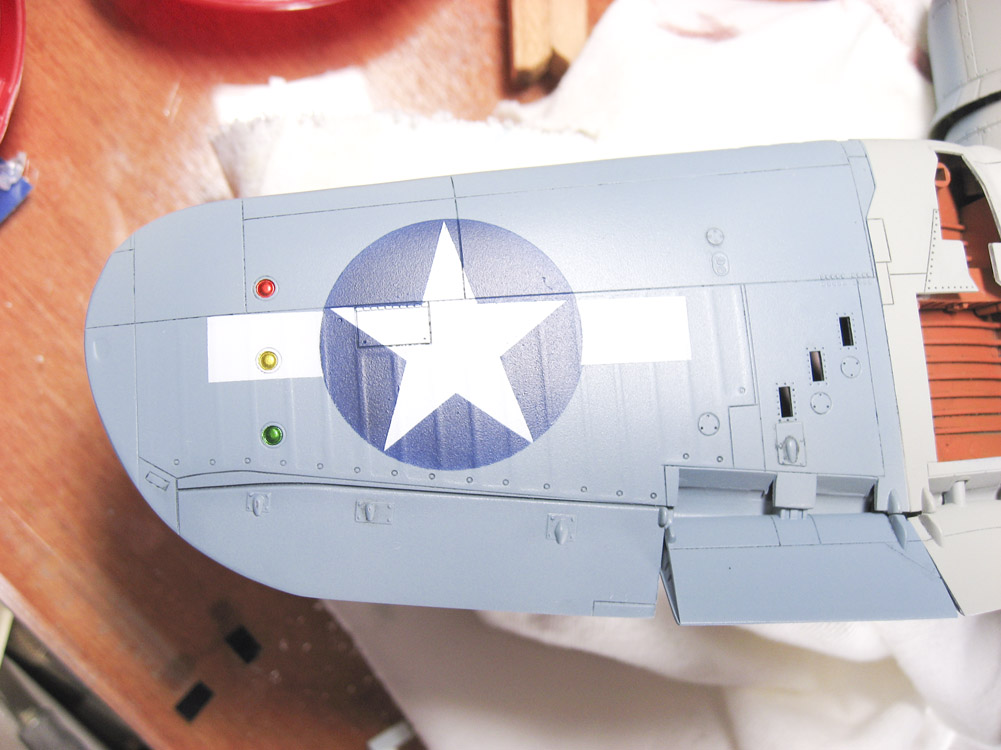
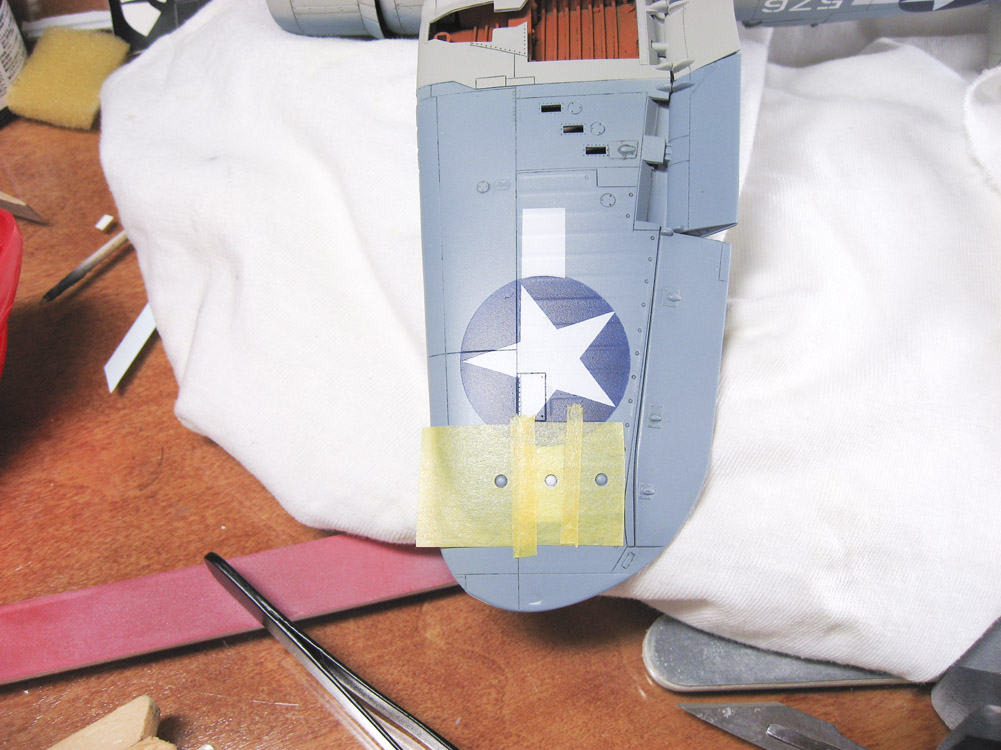
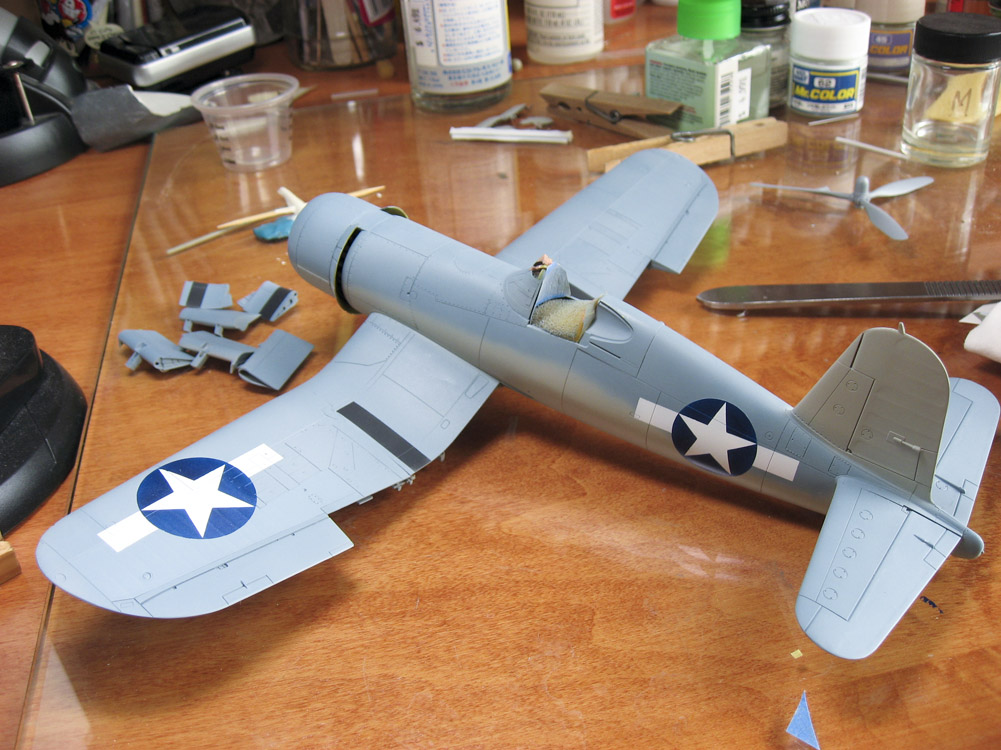
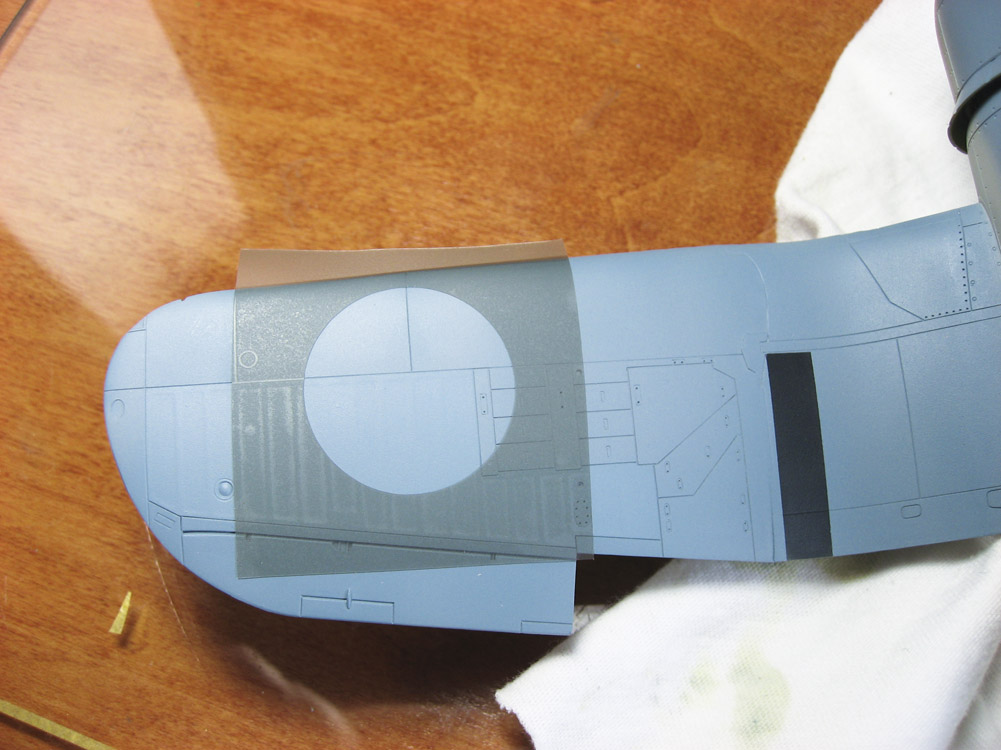
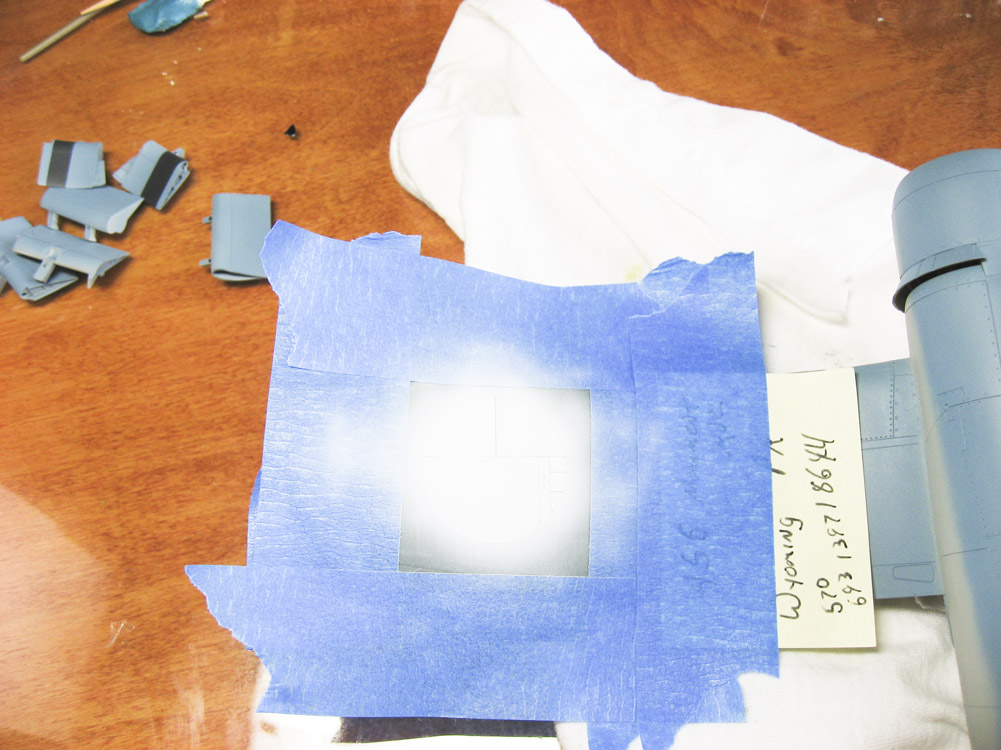
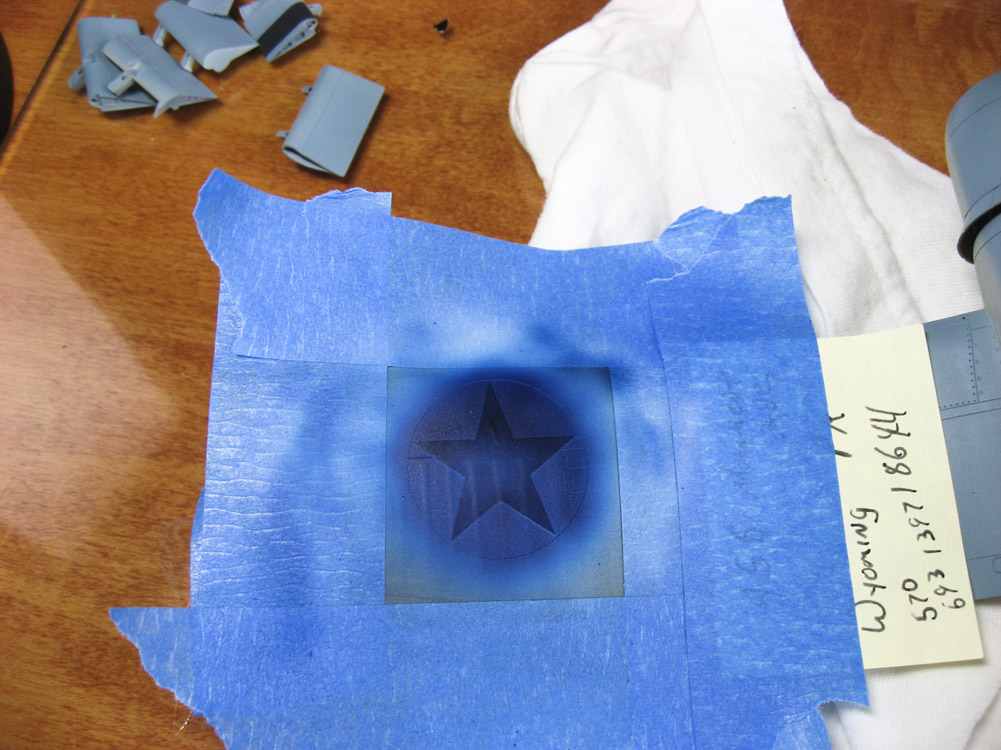
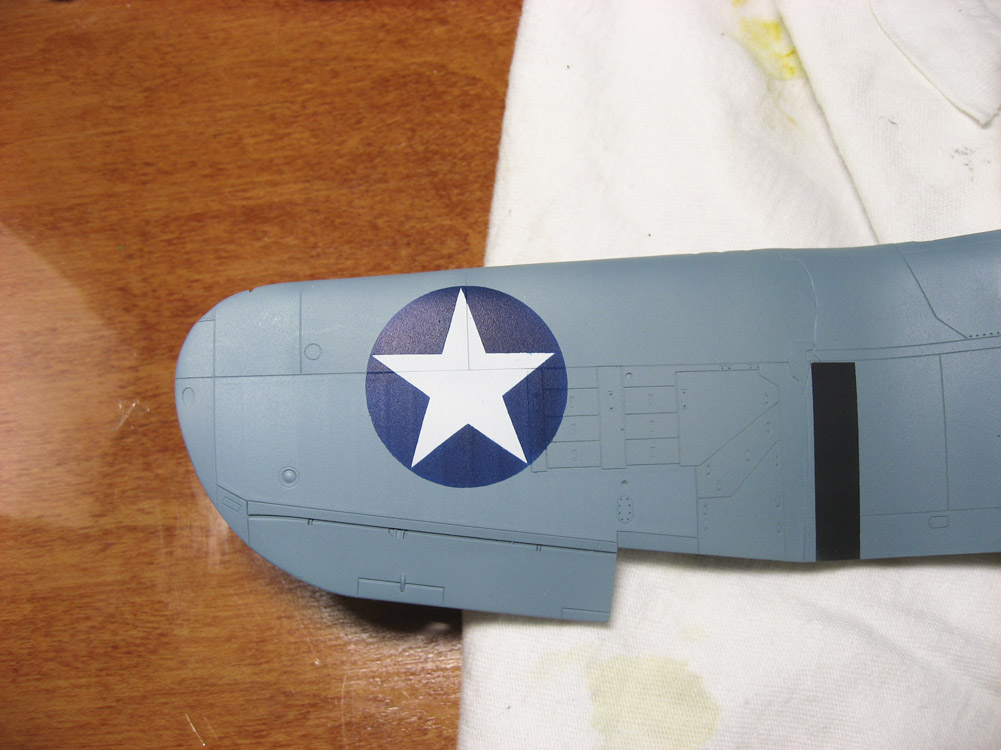
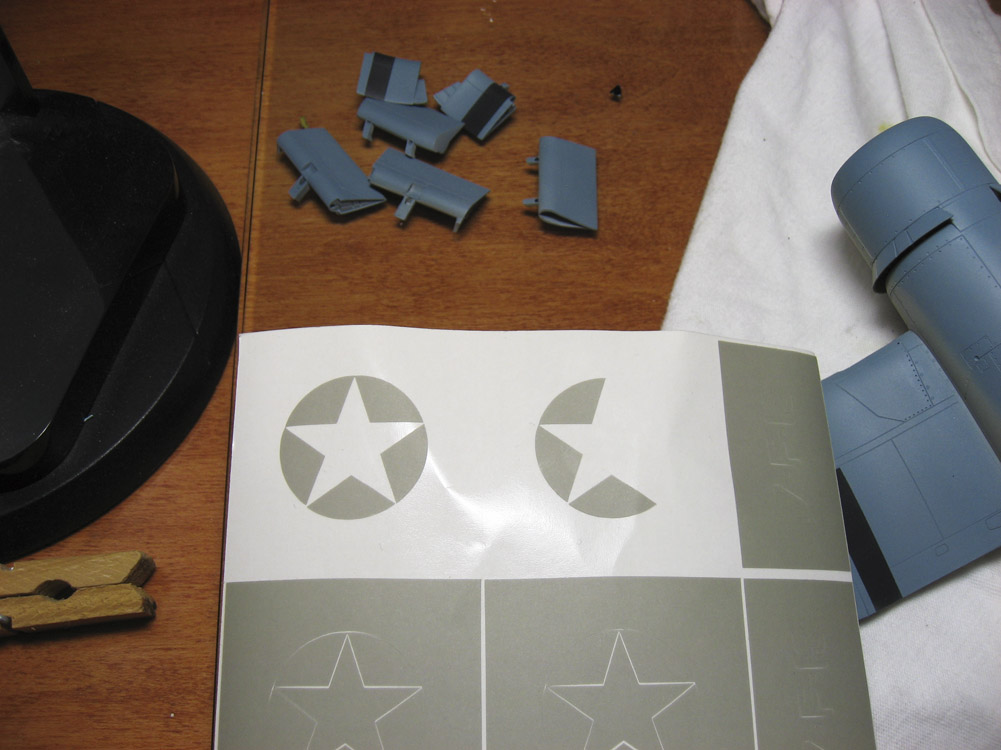
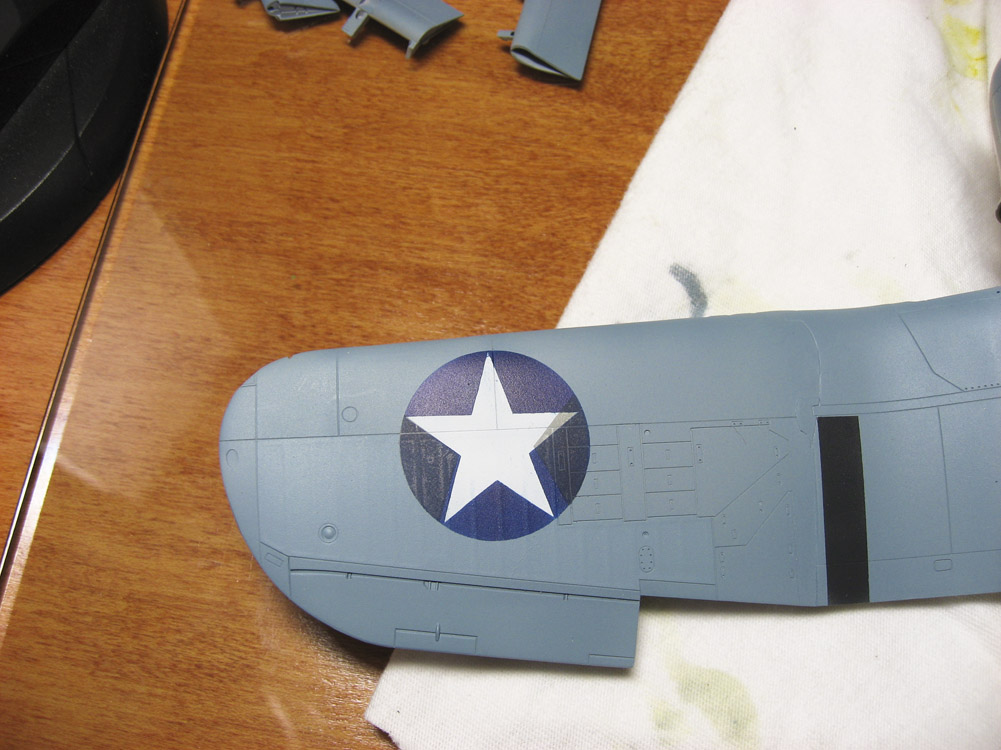
All masking removed, national insignia and wing walk areas all painted and complete.I’ve been away for the past couple of week; a trip to Los Angeles and Las Vegas ate up some of the time, writing figured in as a heavy time drain, and building a new website for a client took the rest. But now, back to the build.

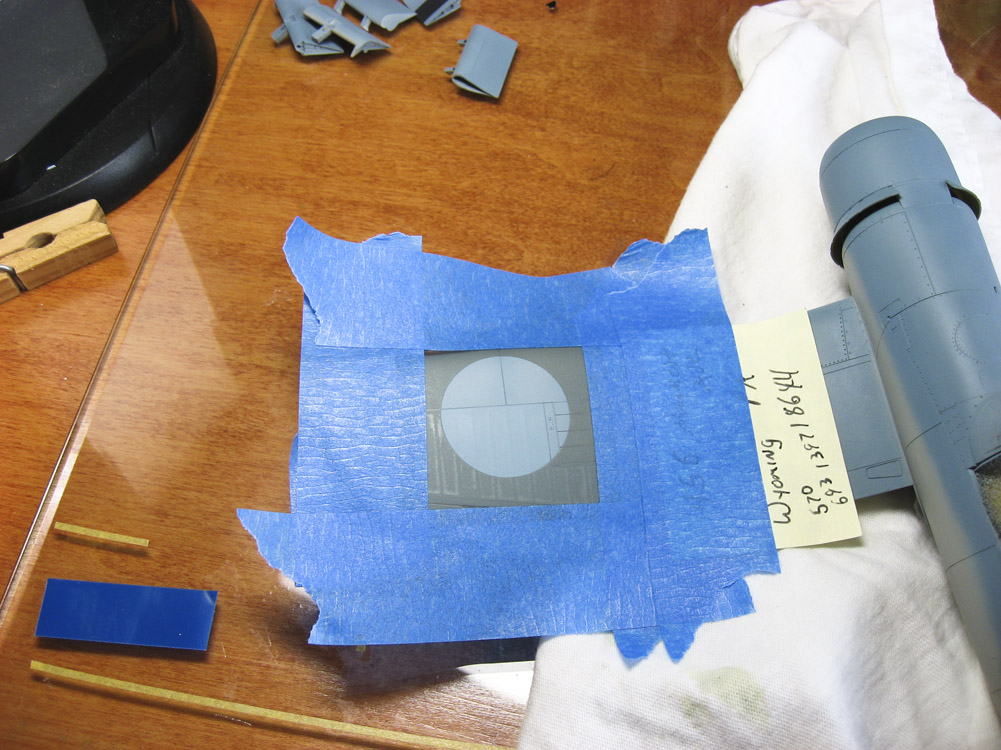
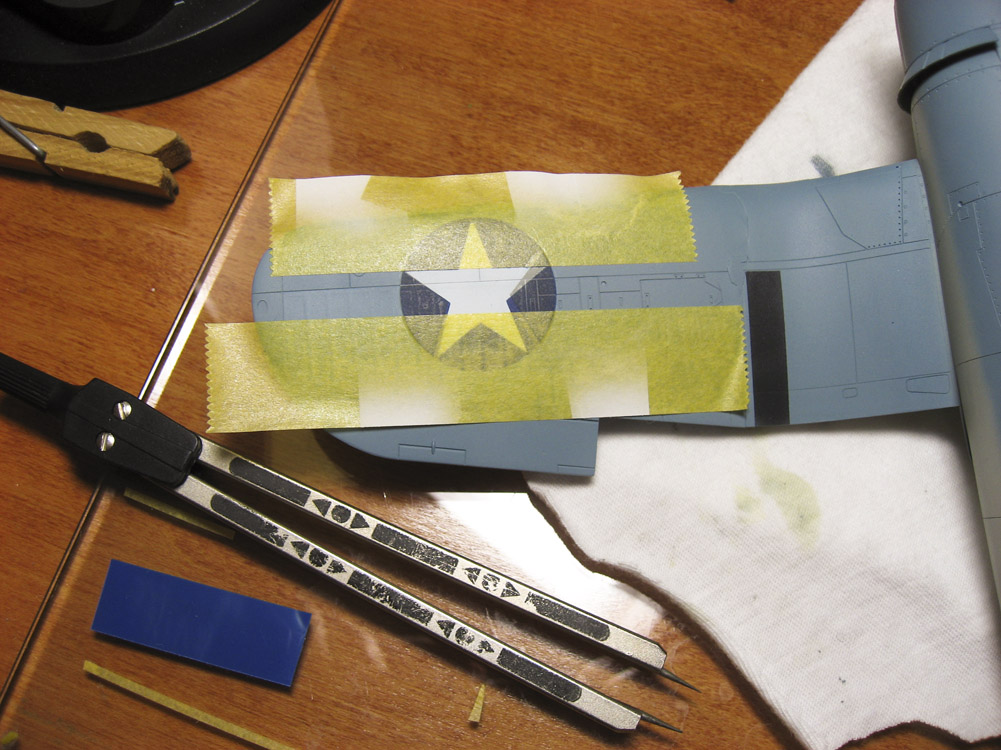
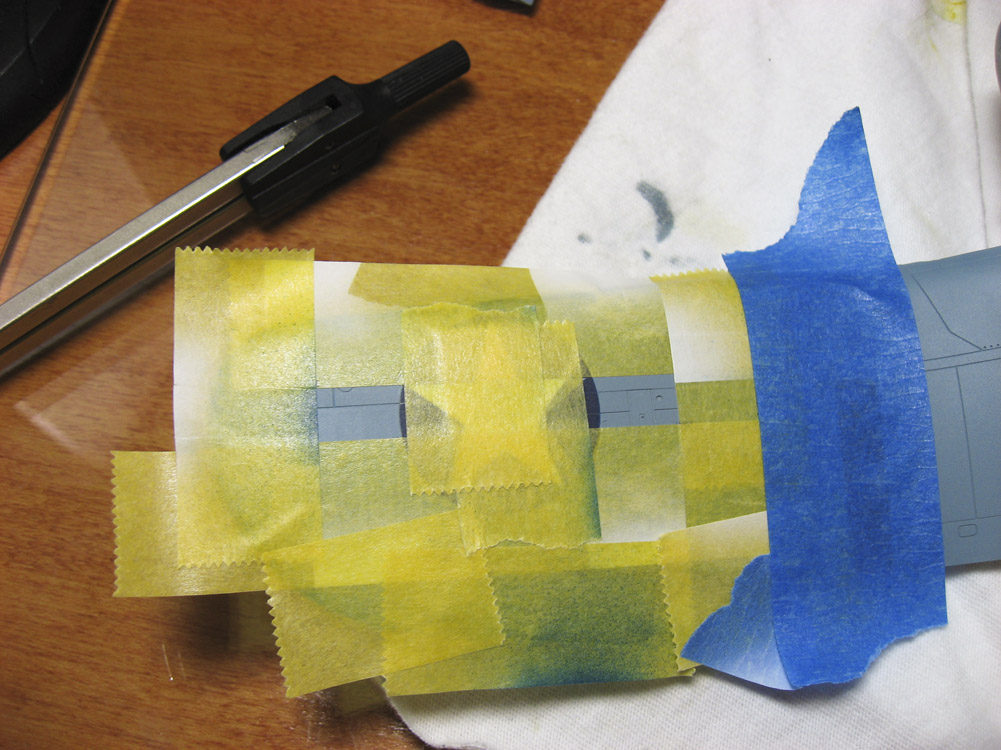
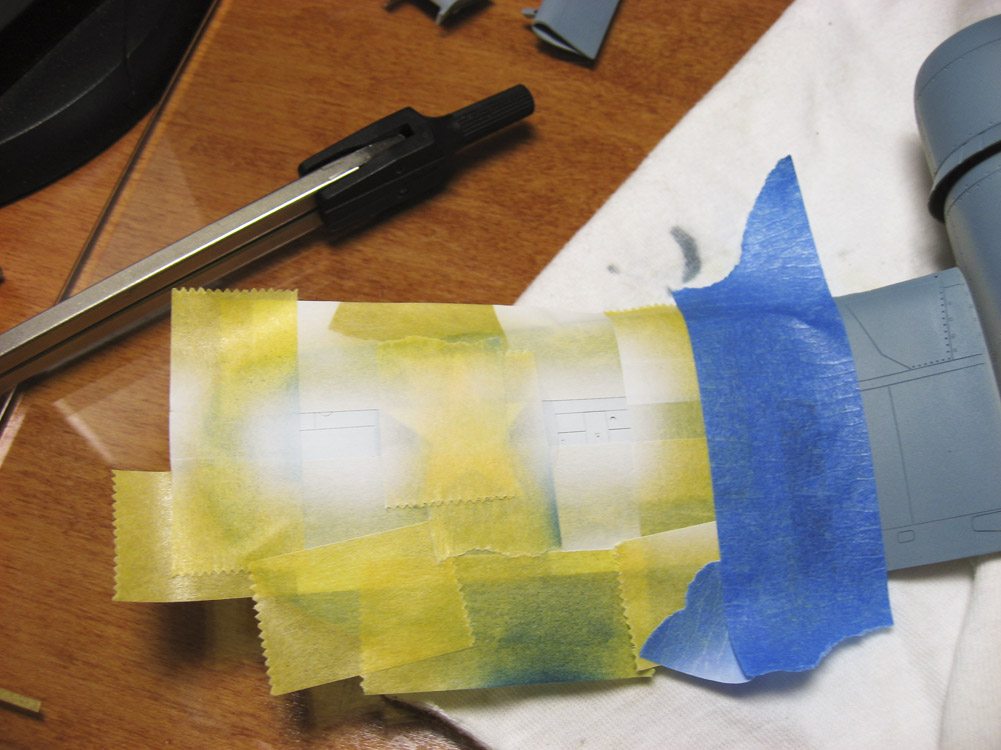
Because I just can’t make things easy on myself, I decided to not use decals for the markings on this bird, but rather to paint them. Actually, the decision wasn’t based solely on making my life more difficult. Markings that are painted on look, well, painted on, like the real ones. The paint is thinner than decals, there’s no clear film around the edges of the markings, and it’s easier to weather them.

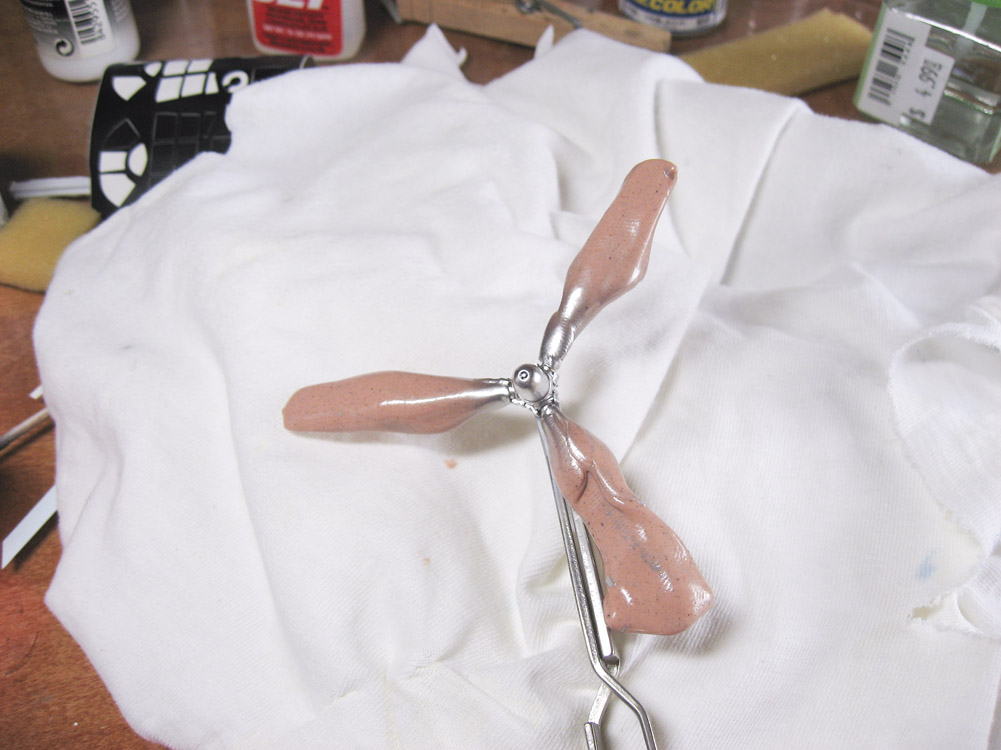
The photos below tell the process. Hover over each one to read the description, and then click on it to see the full-sized picture.

At this point I’m done with painting. Next is a clear coat so I can weather and apply the few decals I will use (the nose art and the three-digit numbers on the fuselage), and then it’s final assembly time.

F4U-1 Corsair: Paint

I’m building this as a Marine Corps bird. Before, and during the early parts of, WWII, Marine squadrons would be made up of old aircraft that the Navy had already used to death, or aircraft that the Navy didn’t want. After the Corsair had difficulties with carrier qualifications — stiff landing gear, bad visibility over the nose, and it’s just a HUGE aircraft — they sent them on to the Jar Heads. The aircraft’s issues didn’t affect shore-based use at all, and the Marines proved them to be such an excellent plane that the Navy resolved the carrier handling issues and eventually began to ship Corsair squadrons on carriers.
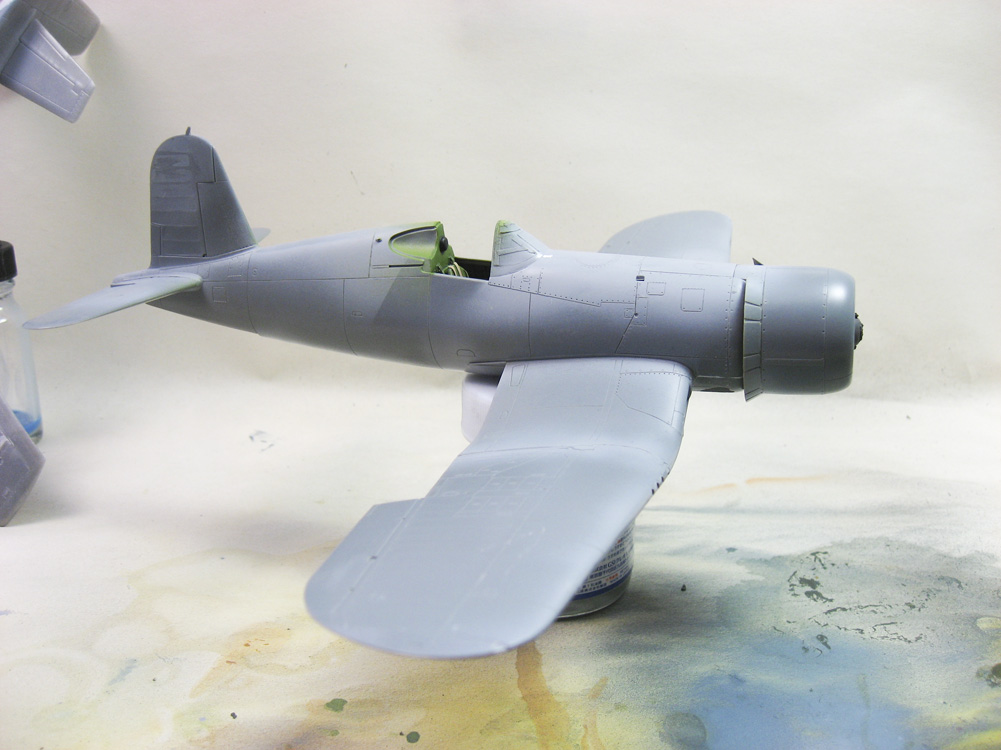
This model is painted in a two-tone scheme. The specific aircraft is “Marine’s Dream” named after the nose art that will be on the cowling. The colors are US Navy Blue Gray, and Light Ghost Gray. The more I think about it, the less sure I am about that gray color, but it looks okay in person, so I’m sticking with it. I used Model Masters Acrylic paint. I sprayed the Gray Continue reading

Appliance Poetry

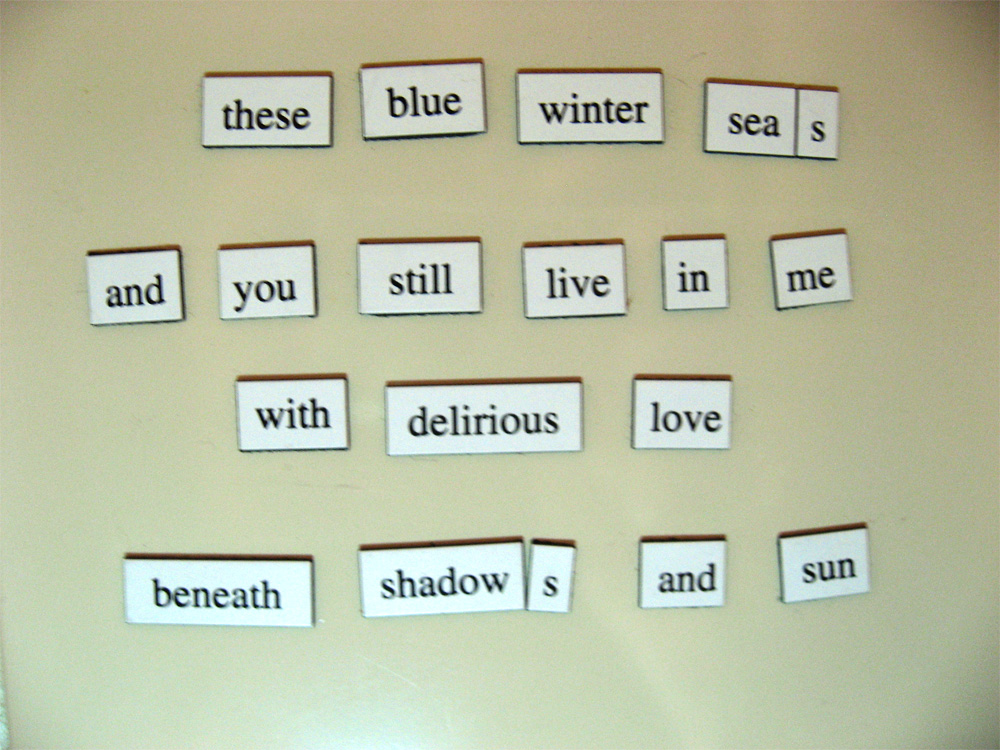
A couple of weeks ago we replaced our old refrigerator with a brand new shiny one. Before the delivery men carted the old one away, I took the above photo of its side.

Nearly fourteen years ago (holy crap, that’s a long time!) I first met my wife at a party at her place, which is now our place. As part of my attempt to woo her, I turned to the ever popular magnetic poetry set on the refrigerator. Considering the limited word palette, I don’t think I did too bad. The poem stayed on the ‘fridge all of those years, and now the words lay in a pile on my desk, as I think of something cool to do with them.


F4U-1 Corsair: Major Assembly Complete

I’d intended to do this post last Sunday evening, you know, keep up a once-a-week progress report on this build and hopefully have it done in three weeks. Kristen’s performance in Brooklyn last Sunday night threw me off schedule, as well as a few things with the build.

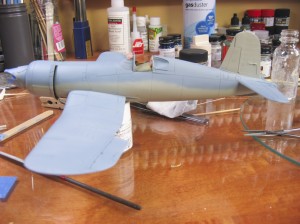
The top photo in this post shows the kit as she is now. The cowling is just stuck on temporarily, I’ll be painting it separate from the fuselage to facilitate handling. I’ve just finished scrubbing her down Continue reading

The USS Arizona Memorial

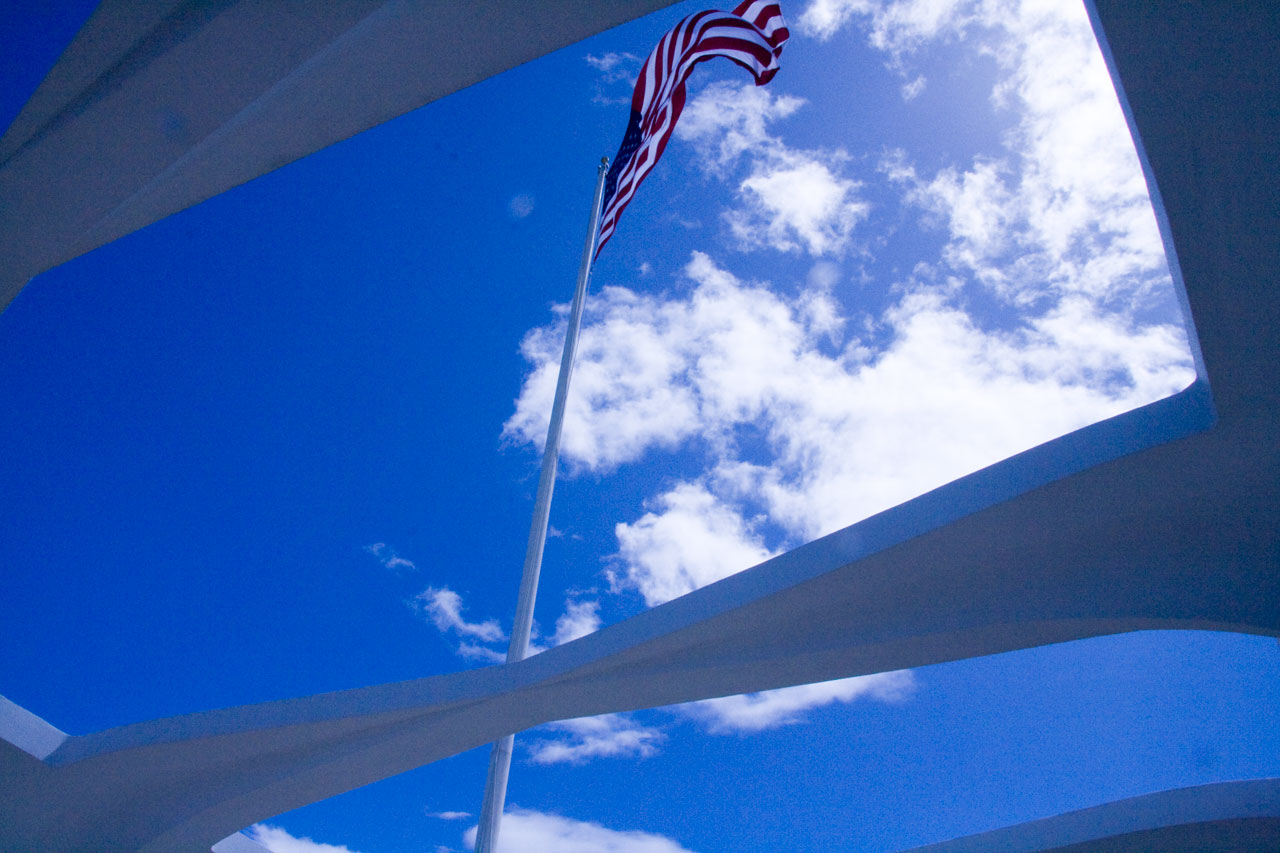
When I was in the sixth grade and at a book fair, I chose a book based on its cover: a listing ship ablaze, black smoke in the sky, aircraft hurtling overhead. It intrigued me, to say the least. I didn’t realize it then, but I’d just selected my first book of many about WWII in the Pacific.  That book wasn’t about Pearl Harbor, and I’ve never been a big student of that particular battle for several reasons, but I’ve always known the Arizona Memorial was one of the few places that I could “be where it happened” for a WWII naval battle. And so, for most of my adult life — and for a good chunk of my childhood — I’ve looked forward to visiting the USS Arizona memorial in Pearl Harbor.

We got to the memorial visitor’s center early, and even at 8 a.m., Continue reading

F4U-1 Corsair: New Project!

After finishing the Viper last week and another ship that I’ll post photos of this coming week, I wanted to start something that I could build as quick as possible.  I’ve had this Tamiya 1/48th scale F4U-1 Corsair sitting in the on-deck circle of the kit storage shelf for years.  The kit’s reputation is that one can open the box, put in some glue, shake said box, and out pops a built model.  Just what I need to cleanse my palette and get ready for whatever’s next.

Besides a quick fun build, there are two other reasons I chose this kit to build now.  One is that the Corsair has been my favorite aircraft Continue reading

Viper: Finished!

I finished off the Viper build last Thursday.  She competed in MosquitoCon 21 on Saturday and took a Second Place trophy in her category.  Now I’m in the process of trying to figure out how to pack this thing up so that it’ll ship to Florida in one piece!

Glad to have this complete.  Really happy with how it turned out.  Almost sad to have to ship her off.

Photos are HERE.

Viper: The Final Touches

This will be my final update post on the Colonial Viper MKII. The next photos will be of her completed. But for now, here are a few photos of the weathering process. I’m only going to show the forward avionics bays to illustrate this, as there’s more going on in that section, detail-wise, than in the engines, and because I’m close enough to the end that I don’t want to show overall shots of her until completely finished.

For washes I still like to use artists oils. I have, however, gotten away from using mineral spirits for thinner, and instead I use lighter fluid. It works just as well, but dries much faster. Using lighter fluid (naptha) allows the oils to dry in just a couple of days, instead of taking nearly a week. I did a general wash of the avionics bays, let that dry, and dullcoated everything. I then used acrylic bronze paint for some details, and once that dried I picked out further points of interest using a silver pencil.

The next step is pastel chalk and weathering powders to dirty her up a bit, and some airbrushing of pure flat black for blast marks, engine residue, and gun smoke.

That’s it. The journey is nearly over. Our yearly club show, MosquitoCon, is next Saturday, and the Viper will be on the contest table. After that, she gets packed up and shipped to her new owner.

Hawaii in Words and Photos

It’s been nearly a month now since Kristen and I returned from our Hawaiian Honeymoon.  We are still in our post-Aloha depression.  It gets better day by day, the freakishly-warm weather we’ve had on the East Coast helps a bit, but it’s still taking some adjustment.

I took several hundred photos during the trip, and while I posted quite a few while we were there, there are still too many to post (and almost too many to sort!).

We started our trip in Waikiki, because Continue reading

Viper: Decals

Photos of decals applied  (the guns in the shots are crooked as they’re just stuck on to see how they look, they’ll be straight once glued on). I used the kit decals for the smaller markings and the squadron badge. The kit supplies both red stripes with the insignia included, or just the yellow insignia if you want to paint your own stripes. The only problem was that they were so translucent that they didn’t show up at all once applied! Fortunately I also purchased an aftermarket decal sheet to get the tail code number and nameplate for Admiral Adama’s bird during the first Cylon War. Those insignia worked just fine.

I also removed the canopy masks. There’s some cleaning up to do where I built up the paint a little too much, but otherwise it looks good.

Next is weathering, and a final clear coat to hide that visible film around the decals. I have to say that I’m pretty impressed with how this model is turning out. I’ve had my doubts along the way, but she’s coming together very nicely!